 Celebrity Media TV
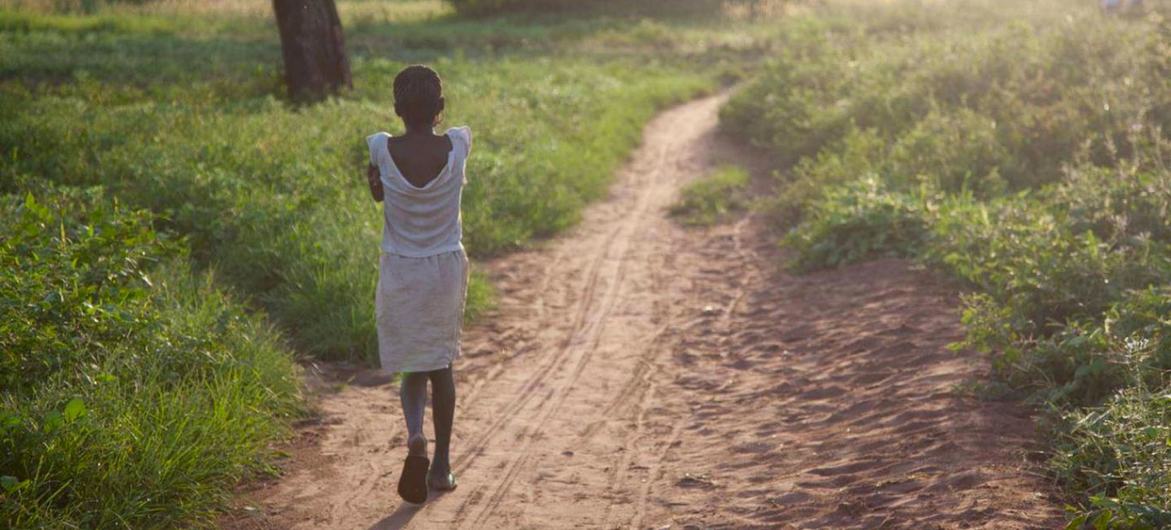 © UNICEF/STARS/Kristian Buus Conflicts and situations of instability can result in higher levels of gender-based violence against women and girls.
Women’s rights are human rights, and universal in times of war and peace, a senior UN official told the Security Council on Wednesday, urging ambassadors to ensure accountability for conflict-related sexual violence.
Pramila Patten, the Secretary-General’s Special Representative working to end rape as a weapon of war, was addressing a high-level debate on strengthening accountability as a means to deliver justice for survivors and prevent future violence.
War’s oldest and least-condemned crime
Recalling that the Council has passed 10 resolutions on Women, Peace and Security, five of which focus on preventing and addressing conflict-related sexual violence, Ms. Patten began by asking what those declarations mean right now for a woman in Ukraine, Afghanistan, Myanmar or Tigray in northern Ethiopia.
“Every new wave of warfare brings with it a rising tide of human tragedy, including new waves of war’s oldest, most silenced, and least-condemned crime,” she said.

‘Significant increase’ in cases
Ms. Patten presented a handful of the horrifying cases of rape and other violations included in her latest report, revealing what she called “the emboldening effects of impunity”.
The report covers some 18 country situations and documents 3,293 UN-verified cases committed last year - 800 more than in 2020, representing “a significant increase”.
Most of those targeted - 97 per cent - were women and girls, while 83 cases concerned men and boys, mainly in detention centres. In 12 cases, lesbian, gay, trans, queer or intersex (LGBTQI) persons were targeted.
Prosecution as prevention
Ms. Patten underscored how prosecution is critical, and a form of prevention, as it can help turn the culture of impunity for these crimes, towards a culture of deterrence.
“Whereas impunity normalizes violence, justice reinforces global norms. It is time to move from visibility to accountability, and to ensure that today’s documentation translates into tomorrow’s prosecutions,” she said.
Regarding the way forward, her report calls for targeted action to reinforce prevention, such as through political and diplomatic engagement to address sexual violence in ceasefire and peace agreements.
Other recommended measures include use of early warning indicators of sexual violence as well as threat analysis, curtailing the flow of small arms, gender-responsive justice and security sector reform, together with amplifying the voices of survivors.
Justice and accountability
Nobel laureate Nadia Murad was among thousands of women from the Yazidi minority group in northern Iraq who were sold into sexual slavery and raped by ISIL terrorists, the group officially known now as Da’esh, in 2014.
Eight years on, some 2,800 women and children remain in the hands of the terrorist group, she said.
“The pursuit of justice is one of the most visible forms of accountability,” she told the Council, citing the historic genocide conviction of an ISIL fighter by a German court last year. She wondered if the international community will do more.
Action, not pity
“As survivors of sexual violence, it is not easy for us to tell our stories. But we do it to prevent what happened to us from happening to others,” said Ms. Murad, who is also a Goodwill Ambassador with the UN Office on Drugs and Crime (UNODC).
“We are called brave, but the courage we really want to see is from leaders in a position to do something, whether they are Heads of State, Member States here at the UN, or corporate leaders. We need more than moral outrage; we need action.”
Ms. Murad called for the Council to refer the ISIL case to the International Criminal Court, or to establish a hybrid court that will prosecute the group’s crimes. She also urged other nations to follow Germany’s example.
Survivors have found the strength to rebuild their lives and help their families, communities, and countries, she said, so surely the world can find the strength to take meaningful steps to end sexual violence in conflict.
“As survivors, we look to you, the leaders in this room, to act with the same courage we have shown. Survivors do not want pity; we want justice.”
‘Murad Code’ launched
During the debate, Ms. Murad announced the launch of a new initiative for collecting evidence of rape in war.
The Murad Code is a set of guidelines for journalists, investigators, and others documenting and investigating conflict-related sexual violence.
The guidelines were shaped by feedback from survivors around the globe, she said, and aim to promote greater respect, understanding, transparency, and healing.
The Murad Code was developed with funding from the United Kingdom, the Security Council president for April.
Lord Tariq Ahmad, the UK Minister of State who chaired the meeting, called for the code to become the “gold standard” for non-governmental organizations, government agencies and human rights groups.
“Putting survivors and at the centre of investigations should not be an option. It should be done by everyone, everywhere,” he said.
Voices of civil society
Two civil society representatives from Syria and Ethiopia also briefed ambassadors.
Legal investigator Mariana Karkoutly said although the Syrian war has been on the Security Council agenda for more than a decade, no action has been taken to hold perpetrators accountable for violations of international human rights and humanitarian law.
She reported that at least 150,000 people are estimated to have been arbitrarily arrested, detained or disappeared since the war began. Nearly 10,000 women are among the scores of Syrians being held in detention centres, where sexual violence is used as a tool to humiliate, punish and force confessions.

No peace without justice
Ms. Karkoutly, co-founder of an organization for women lawyers called Huquqyat, outlined a list of actions for the Council that included referring the situation in Syria to the International Criminal Court, adopting a resolution on detainees and missing persons, investigating and prosecuting perpetrators of sexual violence, and ensuring women’s rights are at the heart of accountability efforts.
“When people in Syria watch conflicts rage in Ukraine and other parts of the world today, we are reminded of our own suffering, and the abject failure of this body to stop the violence,” she said.
“I join my voice with those of the millions of girls and women from Syria who are not here with me today and call on you to take action. There can be no peace without justice.”
Rape and reprisals in Tigray
Hilina Berhanu from Ethiopia spoke of her visits to the Tigray region, where rape has been used as a tactic of war or means of reprisal.
This violence is ethnically motivated, she said, and used to humiliate survivors and their communities. Men and boys have also been victims, while women with disabilities, and those from minority and indigenous communities, have been particularly at risk.
Ms. Berhanu urged the Security Council to demand that all efforts towards documenting, investigating and preventing sexual violence in conflict are centred around survivors. Ambassadors must also demand that warring parties allow safe humanitarian access to people in need in Tigray and elsewhere, and that aid includes comprehensive sexual and reproductive healthcare.
"Lack of access to psychosocial support services also means that the mental health of survivors hangs in the balance. Many have already died by suicide," she said.
Ms. Berhanu had a special request for the three African countries on the Council – Gabon, Ghana and Kenya -- urging them to work both at the UN and in the Africa Union to drive forward action on women, peace and security.
These countries were also asked “to take a harder look at the prevailing view that supporting investigations of conflict -elated sexual violence in Ethiopia could somehow derail the proposed reform agenda of the current government.”