 Celebrity Media TV
Recently, a previously little-noticed film titled Niu Lai suddenly became a widely discussed topic online.
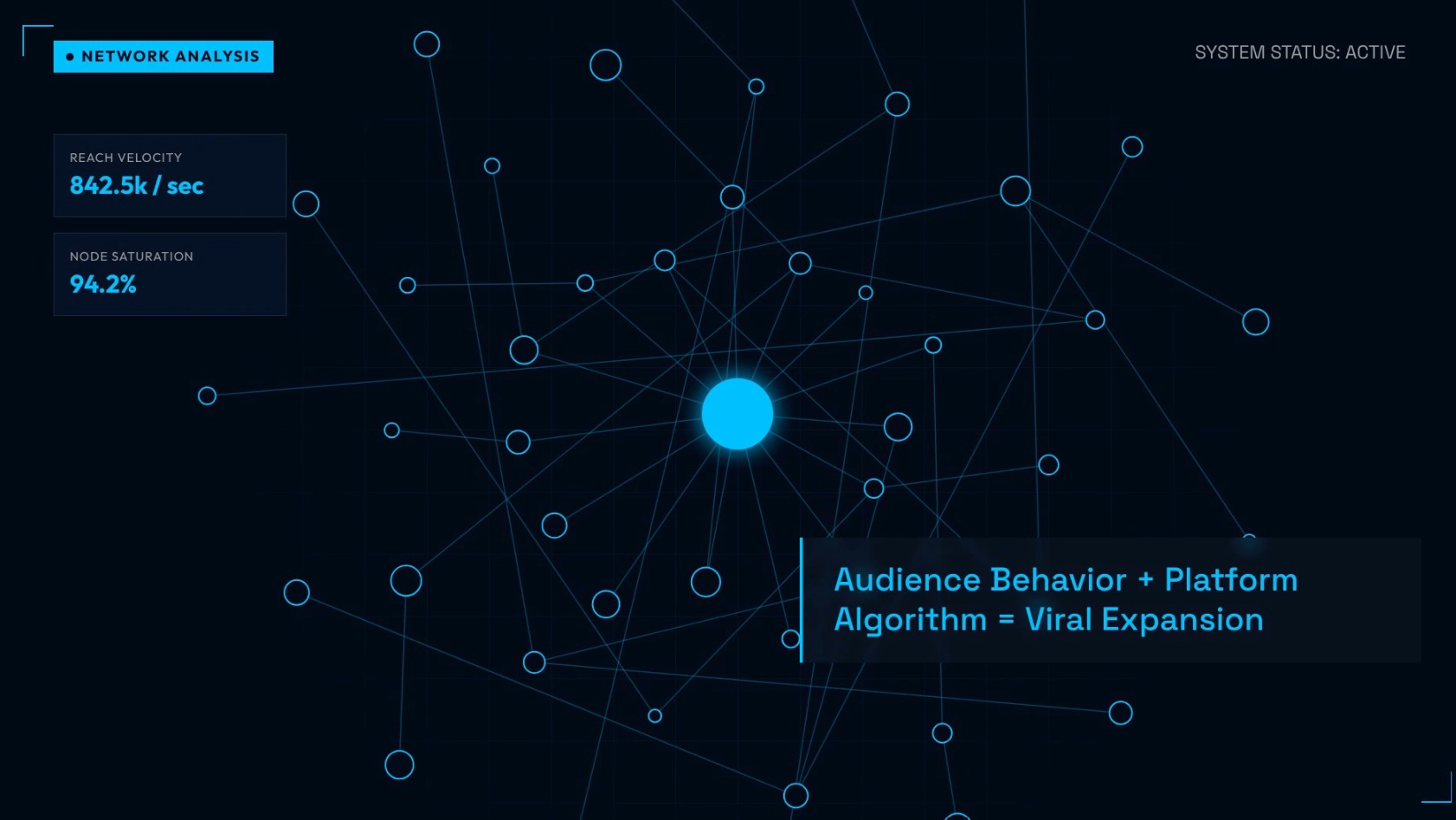
This phenomenon deserves attention—not simply because a film “unexpectedly went viral,” but because it once again reveals how the rules of media distribution are changing. In the age of the internet, and especially artificial intelligence, how far a piece of content can spread is no longer determined solely by professional institutions, media editors, or creators themselves. Instead, it results from the combined influence of audiences, platform algorithms, and social networks.
More precisely, audiences express their preferences through watch time, clicks, comments, shares, and derivative creations, while platform algorithms record and amplify those choices. Their interaction determines which content will be seen by more people.
This is reshaping the entire media industry.

In the era of traditional media, content distribution generally followed a relatively clear path: professional institutions produced content, editors selected it, media organizations published it, and audiences received it.
Before a news story could enter the public eye, it first had to pass through professional gatekeepers. A story could become a headline only if editors considered it important. A project could receive resources only if producers believed it had value. A program could be broadcast only if television networks thought it met audience needs. A film could receive additional screenings only if theaters judged it to have market potential.
Traditional media thus established a powerful content-filtering system. It could screen information, verify facts, and maintain certain professional standards. At the same time, it meant that a small number of institutions held the power to select and distribute content for many years.
The internet first disrupted this relatively centralized structure of media distribution.
With the rise of YouTube, TikTok, and numerous social platforms, ordinary people gained access to communication tools that had once belonged only to media institutions. A smartphone and an account could now constitute a small media outlet. Creators no longer had to depend on television networks, newspapers, publishers, or professional distribution channels to reach the public.
However, an even more profound change than “everyone can produce content” is that audiences have begun to participate directly in deciding which content deserves to continue spreading.
Whether anyone watches a video after it is published is no longer determined entirely by editors. It depends on whether viewers are willing to stop scrolling, continue watching, and respond. Platform algorithms continuously analyze these behaviors and use them to determine whether the content should be recommended to more people.
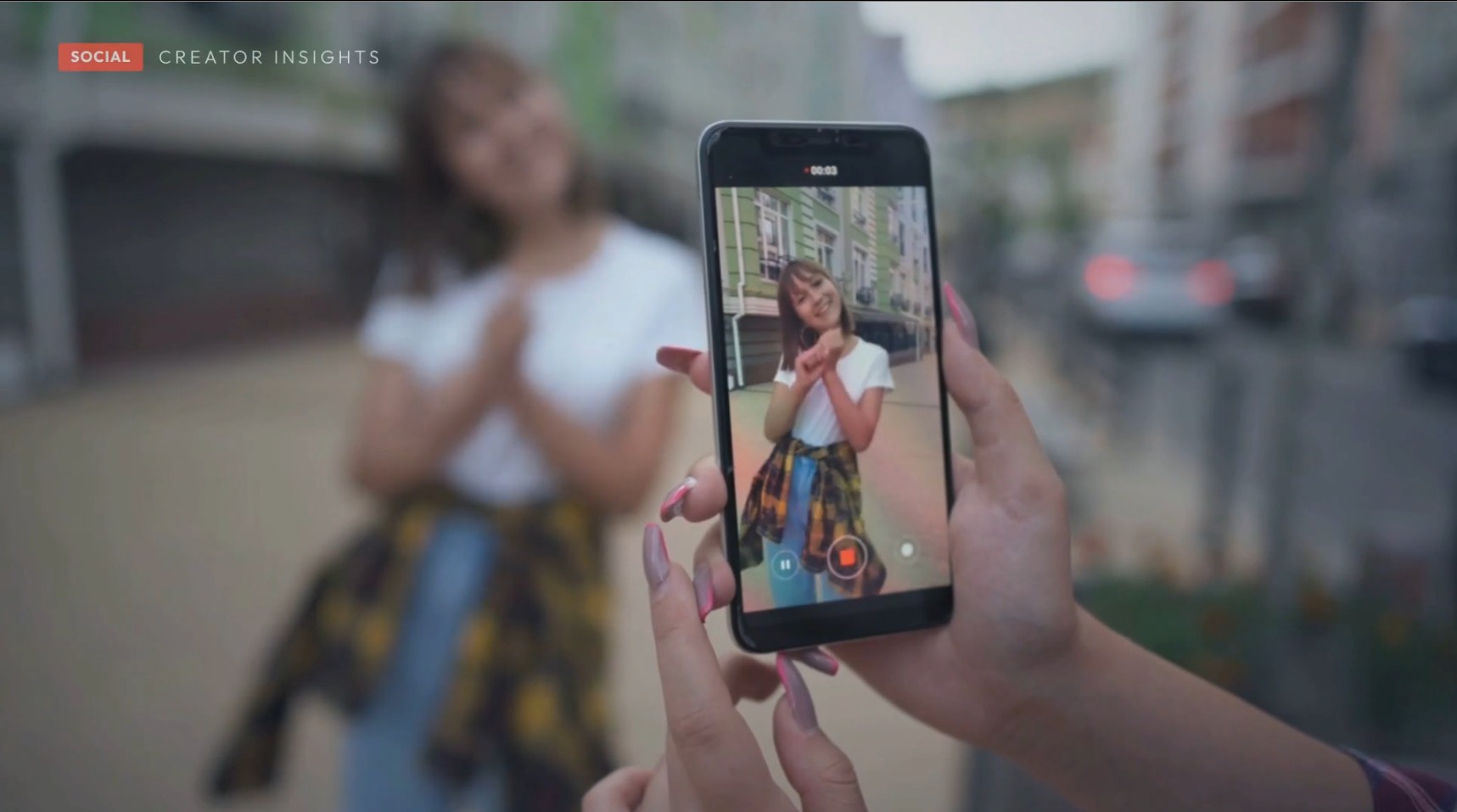
When explaining its “For You” recommendation system, TikTok has stated that user interactions—including likes, shares, comments, follows, views, and replays—serve as important signals for identifying user interests. Video information such as captions, sounds, and hashtags also influences recommendation results.
YouTube has similarly explained that its recommendation system considers signals such as clicks, watch time, shares, likes, dislikes, and user surveys to determine which content is most likely to satisfy viewers. YouTube has also stated that recommendations generate more viewing activity than subscriptions or searches.
This means that the fundamental logic of media distribution has changed.
In the past, the dominant model was “editors decide what is worth watching.” Today, it is increasingly becoming “audience behavior tells algorithms what content should continue to be recommended.”
However, this does not mean that audiences directly determine the quality of content, nor does it mean that algorithms can judge whether something is truthful, important, or socially valuable. Algorithms primarily identify behavioral signals rather than make value judgments. They can measure how long people watch and whether they interact, but they may not understand why people are watching. Nor can they automatically determine whether the content is trustworthy.
Consequently, algorithms often amplify not “the best content,” but the content most likely to provoke a reaction.
This also explains a phenomenon that confuses many traditional media professionals: Why can some crudely produced short videos attract millions or even tens of millions of views, while professionally produced programs requiring substantial human and financial resources may receive little attention?
The reason is that “content quality” and “distribution potential” are two different dimensions.
A film may have considerable artistic value but lack strong social-sharing potential. A simply produced video, however, may surprise people, make them laugh, provoke anger, or stimulate curiosity, prompting users to comment, share, and imitate it.
From a distribution perspective, it has already met the conditions necessary for further amplification.
The internet competes first not for awards, but for attention. In a constantly refreshing information feed, the first threshold for distribution is not “Is this an excellent work?” but “Is the user willing to stop scrolling?”
More importantly, in a social media environment, even “dislike” can be converted into distribution.
When users like a video, they may click “Like,” save it, or share it. When they dislike it, they may leave a critical comment or even forward it to friends with a message such as, “Look at this ridiculous thing.”
As a result, approval can generate distribution, but so can criticism, ridicule, controversy, and curiosity. Recommendation systems may interpret all these behaviors as evidence that the content has attracted attention and interaction.
Therefore, high traffic does not necessarily indicate high quality, nor does it mean widespread approval. It only shows that the content successfully triggered a large volume of user behavior.
In the AI era, it will become increasingly important to distinguish among content value, news value, social value, and distribution value.
What makes Niu Lai especially worthy of study may not be the film itself, but how it entered the public eye and gradually became a trending topic.
Its distribution followed a typical internet pathway: the content first appeared and attracted the attention of a small number of users; controversy and commentary followed; users began sharing, editing, imitating, and reinterpreting it; the topic stimulated greater curiosity; and new views and interactions encouraged platforms to recommend it further.
Once such a cycle forms, distribution may gradually move beyond the creator’s control.
Creators cannot completely determine how the public interprets their work. Media organizations cannot fully control how a topic develops. Platforms do not create popularity out of nothing; they continually adjust their recommendations by tracking user behavior.
What truly drives distribution is a complex system composed of content, audiences, algorithms, social relationships, emotional responses, and derivative creations.
Within this system, the original work is merely a “seed.” Only when large numbers of users begin discussing, adapting, and reinterpreting it can it develop into a complete media phenomenon.
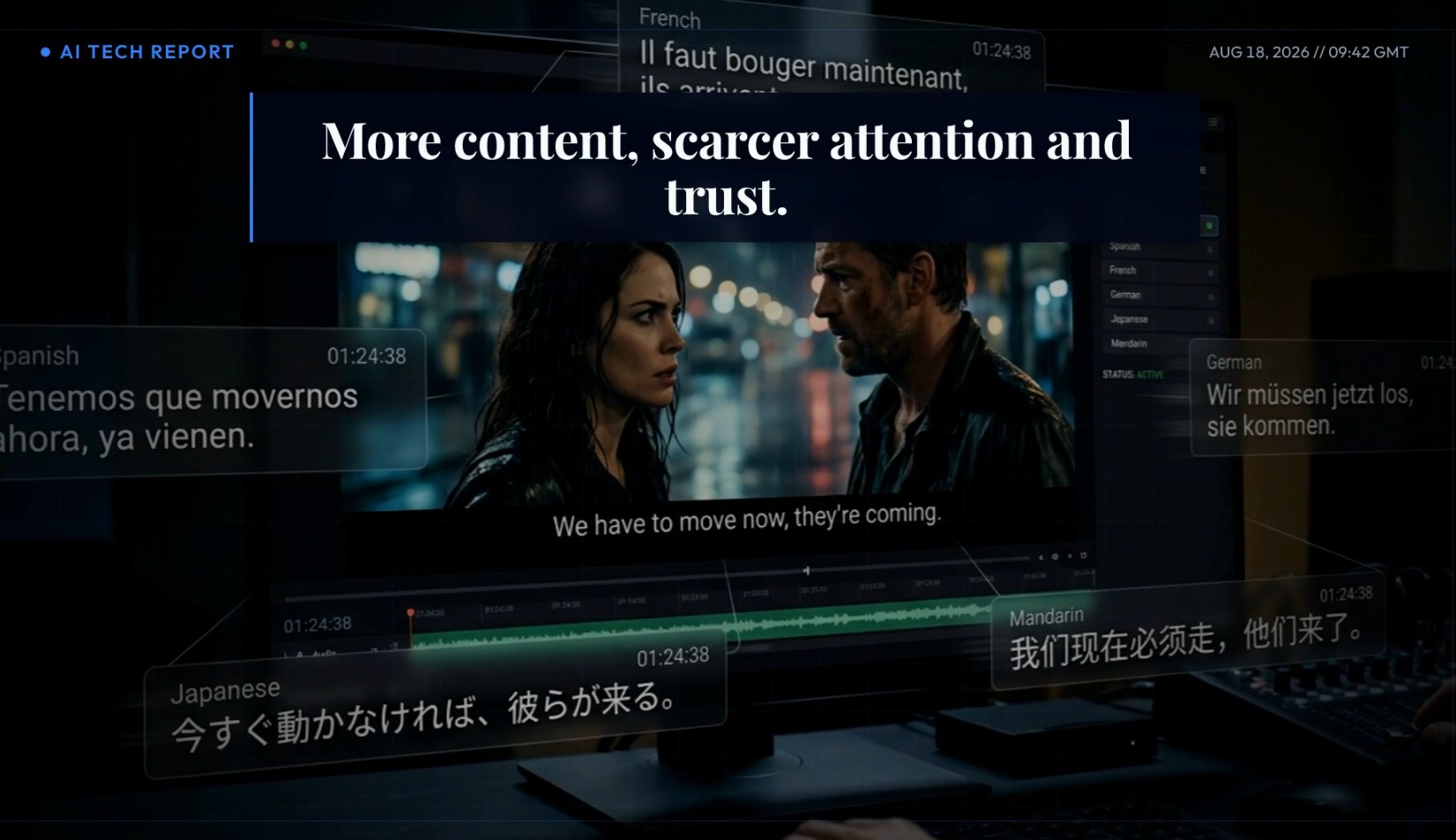
AI Makes Content Easier to Produce—but Attention More ScarceIf the mobile internet enabled “everyone to become a media outlet,” generative AI is now taking this transformation further by allowing everyone to produce media content at a low cost.
In the past, producing a professional video required collaboration among camera operators, lighting technicians, editors, voice actors, translators, designers, and other specialists. It also required substantial funding and time. Today, AI is rapidly lowering these barriers.
One person can now complete some of the work that once required an entire team. An article can quickly be transformed into a video. An interview can generate multilingual subtitles and voice-overs. A video can be adapted for different countries and cultural audiences. Even a still image can be converted into dynamic content.
This means that, in the future, the truly scarce resource may no longer be the ability to produce content, but human attention.
As the volume of content grows rapidly, the central competition in media will shift from “Who can produce content?” to “Who can make audiences stop?”, “Who can earn their trust?”, and “Who can build lasting relationships?”
Within the traditional media system, gathering information, editing, verification, production, and publication were core capabilities. These skills remain important in the AI era, but media organizations must also develop another essential capability: understanding their audiences.
Who is watching? Why are they watching? How long do they watch? Why do they share? What makes people stop scrolling? What makes them leave? Why are audiences willing to comment, participate, or create derivative content?
These questions will directly influence content planning, presentation formats, publishing platforms, and distribution timing.
Future competition in media may not be about who produces the most content, but about who understands their audience best and can translate that understanding into a consistent content capability.
From this perspective, a new form of “audience sovereignty” is emerging.
Today’s audiences are no longer passive recipients of content. They are simultaneously consumers, distributors, commentators, participants, and sometimes content creators. After a video goes viral, those who sustain its continued spread are often not the original creators, but the thousands of ordinary users who share, comment, edit, imitate, dub, and translate it.
However, “audience sovereignty” does not mean that audiences have completely independent choices. What users see is still influenced by platform rules, commercial interests, social relationships, and algorithm design. Therefore, rather than saying that distribution power has been completely transferred to audiences, it is more accurate to say that this power is being redistributed among media institutions, platforms, and audiences.
The Logic of Traffic Cannot Replace Professionalism
Studying the rules of internet distribution does not mean that media organizations should deliberately cater to low-quality content.
If traditional media organizations see crudely produced videos attracting enormous traffic and conclude that “the rougher the content, the more easily it spreads,” they are also misunderstanding the rules of distribution.
The question worth studying is not “Why does it look so bad?” but “Why does it make audiences stop scrolling?”
These are fundamentally different questions.
Excellent media must integrate truthfulness, professionalism, news value, and expressive ability with audience psychology, social distribution, platform mechanisms, and AI tools. Media organizations must understand how traffic is generated without treating traffic as the only standard.
In fact, as AI makes content increasingly easy to produce, professionalism will become even more important.
In an environment overwhelmed by misinformation, information overload, and low-quality content, verifying facts, finding credible sources, providing necessary context, explaining complex issues, and accepting responsibility for what is published will become increasingly rare and valuable capabilities.
The most competitive media model of the future should not simply be “traditional media versus new media,” nor “human production versus AI production.” It should combine professional media capabilities, AI-powered production, platform distribution, and audience participation.

In the past, people generally understood a media organization as a fixed institution with offices, reporters, editors, camera crews, and distribution channels.
Media organizations in the AI era may look entirely different.
They may consist of only a few people, yet use AI to organize information, translate, edit videos, generate subtitles, produce voice-overs, and create visual designs. At the same time, they may connect with audiences across YouTube, TikTok, Facebook, Instagram, WeChat, and other platforms, using multilingual content to reach different countries and cultural groups.
The core assets of such a media organization will no longer be limited to offices, equipment, and staff size. Instead, they will include content databases, brand credibility, AI capabilities, distribution networks, and a sustained understanding of audiences.
This also means that small media organizations have, for the first time, an opportunity to gain the multilingual and cross-platform distribution capabilities that were once available only to large institutions. However, lowering the barriers to production does not automatically establish credibility. Tools can expand scale, but trust must still be built over time.
From the viral success of Niu Lai and the recommendation systems of YouTube and TikTok to the rapid development of AI-generated content, a new trajectory of media evolution is emerging:
In the traditional media era, media organizations primarily selected content and searched for audiences. In the internet era, audiences began actively selecting their media. In the AI era, content production, algorithmic recommendations, and audience participation are becoming more deeply integrated, jointly creating distribution.
Therefore, when evaluating content today, we cannot ask only, “Is it good?” We must also ask: Who is willing to watch it? Why are they willing to watch? Why are they willing to share it? Can it stimulate participation? Does it generate approval, controversy, or merely temporary curiosity?
In an era of abundant content and continually declining production costs, human attention is undoubtedly a scarce resource. Yet capturing attention alone is not enough to create genuine media value.
Attention can only open the door to distribution; trust is what sustains a long-term relationship. Algorithms can generate exposure, but only professionalism can establish credibility.
Niu Lai may simply be a case of unexpected viral success, but the question it raises is one that the entire media industry must confront: In an era when everyone can speak and AI can produce content on a massive scale, who ultimately decides what deserves to be seen by the world?
The answer is no longer a particular editor or a single media organization.
Audiences make choices through their behavior. Algorithms record and amplify those choices. Creators and media organizations help shape the environment in which those choices occur. The media organizations with genuine distribution power in the future will be those that understand their audiences, use AI and platforms effectively, and remain committed to truthfulness, professionalism, and public responsibility.