 Celebrity Media TV
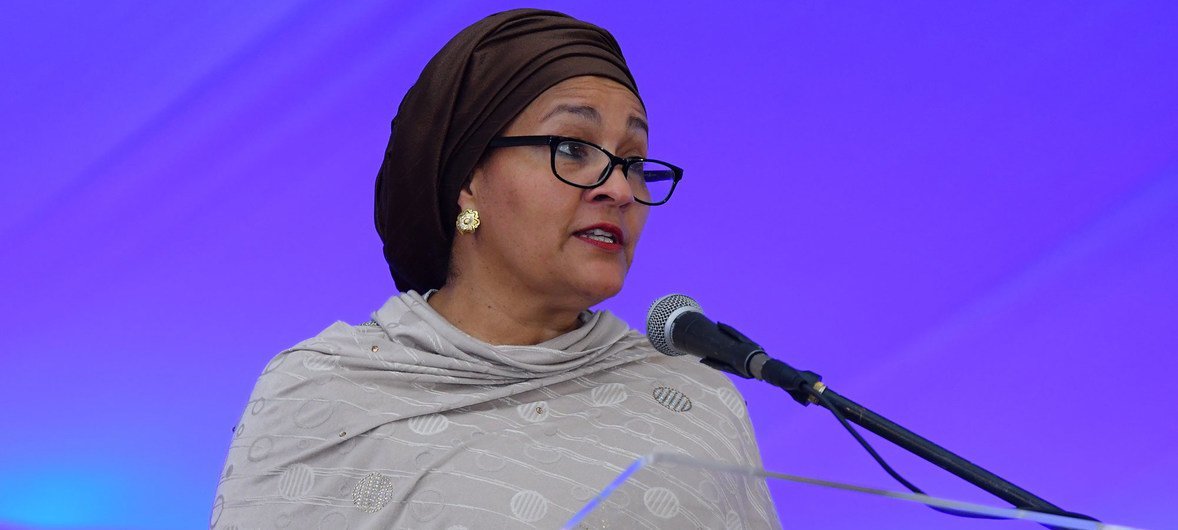
UN Deputy Secretary-General Amina Mohammed highlighted the continued relevance of the Sustainable Development Goals (SDGs), during a meeting with the President of Tunisia, Kais Saied, held on Sunday.
Ms. Mohammed was in the country to attend the eighth Tokyo International Conference on African Development (TICAD8), which concluded that day.
The conference has been organized by Japan since 1993, under the philosophy of “African Development for African people.” It is co-hosted by the UN, the UN Development Programme (UNDP), the World Bank, and the African Union Commission.
A new era
In welcoming the UN deputy chief, President Saied spoke of the new era in the world, citing the COVID-19 pandemic and the war in Ukraine, but also in Tunisia, which has a new Constitution that he said will establish greater accountability for all.
The President also recognized that the UN plays an important role as “nations united”, working together to confront common challenges.
He said TICAD has already brought important results for Africa, and there will be much to do to implement agreements reached during this latest edition of the conference.
SDGs remain relevant
Ms. Mohammed recalled that the SDGs remain a very relevant framework in this new era, and TICAD has served as an important reminder.
The 17 goals aim to bring about a more just and equitable world, including through ending extreme poverty, achieving gender equality, and spurring economic growth, while also tackling climate change and preserving the natural environment.
They were adopted by world leaders in 2015 and have a deadline of 2030.
The UN deputy chief said that in many places, governments have not yet succeeded in delivering better public services, particularly for women and girls. She added that the UN will continue to support countries, and give hope to people.
As social cohesion and the concept of the State have weakened recently in many places, she agreed that a new model and appreciation of democracy are needed to build more efficient and inclusive institutions able to deliver for the world’s people.

Transforming education
Ms. Mohammed reminded President Saied of the UN Secretary-General's invitation to attend the upcoming UN General Assembly and the important Transforming Education Summit.
The three-day event, which begins at UN Headquarters on 16 September, aims to set out a new vision for education that equips learners of all ages and backgrounds with the skills, knowledge, and values they need to thrive.
She said that as a professor, President Saied could help redefine and rethink education in Africa.
The President confirmed his interest in attending, and mentioned that adapting education to this new era is fundamental. He said a Supreme Council for education and learning is included in Tunisia’s new Constitution.
UNDP Administrator Achim Steiner, who also attended the meeting, added that a new social contract is needed between people and their institutions.
Human security critical for Africa
Ms. Mohammed also addressed TICAD8 on Sunday, where she focused on the importance of realizing a sustainable and resilient society based on the concept of human security.
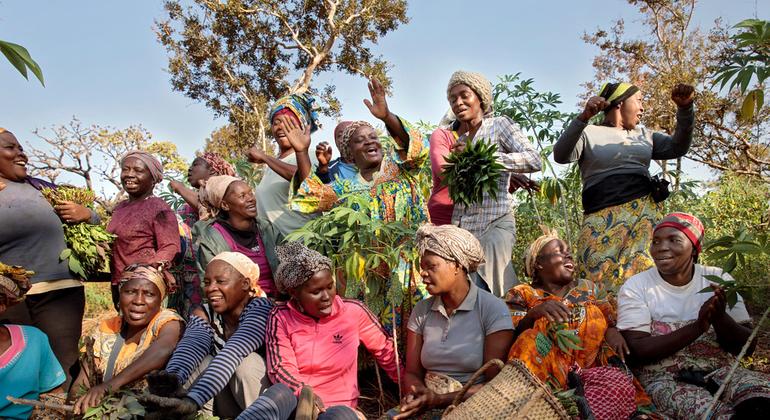
She highlighted how partnerships established at the conference over the years have helped increase access to health services, education, water, and sanitation, in addition to promoting peace and stability.
However, she said many people are still struggling when it comes to issues such as housing, health, education, and gender equality.
Furthermore, new challenges have emerged that put sustainable development at risk, such as the global food and fuel crisis sparked by the war in Ukraine, and the “triple planetary crisis” of climate, biodiversity and pollution.
“Achieving human security -- freedom from fear, want and indignity -- is more important than ever to protect the peoples of Africa from threats to their survival, dignity, and livelihood,” she said.
“It is also critical to empowering all people — including women, children, and other vulnerable groups — to shape and fully own the process of building communities and nations.”
Solutions for a sustainable future
The conference provided an opportunity to leverage the human security approach in finding solutions for today’s global challenges, Ms. Mohammed told participants.
“Doing so will help countries and communities across Africa access the very best solutions to accelerate progress. Only then can we deliver on our promises and help millions of people in Africa co-create a sustainable and inclusive future,” she said.
The UN deputy chief outlined five ways how the human security approach can help countries to overcome the current “complex context” as they strive to achieve development objectives outlined by the UN and the African Union.
“Faced with systemic risks, we must step up our work on recovery, prevention and anticipating future crises in an integrated manner. Foresight analysis and social protection research will be key tools,” she said.
People-centred approaches
Ms. Mohammed called for a “revolution in data”. She said indicators of development progress must go beyond focusing solely on measurements such as Gross Domestic Product (GDP) to determine well-being in order to better measure vulnerabilities.
“People-oriented and people-centred approaches should be at the heart of everything we do,” she stressed. “Re-establishing trust and fostering a stronger social contract between governments and people must be integral to our efforts.”
Her fourth point focused on the New Agenda for Peace - a UN platform for constructive dialogue on the link between peace, development and humanitarian affairs, as contained in the UN Secretary-General's Report called Our Common Future.
“We need a reset of the current responses to preventing and exiting conflict. Women will be key players in this endeavor,” she added.
For her final point, Ms. Mohammed stressed the need to pay greater attention to digital threats, including online propaganda and hate speech.
At the same time, governments must find ways to use technology to serve people, she added, while also ensuring that foundational learning includes the use of digital tools in teaching and learning for all.