 Celebrity Media TV
—The Real Key Is Not Winning the Most Support, but Avoiding a Veto by Any of the P5
Following the third secret, informal straw poll in the selection of the next United Nations Secretary-General, an increasingly important question has emerged:
If the current candidates remain unable to secure a consensus within the Security Council, could a new figure emerge—someone who has never entered the race but whom all five permanent members could accept?
At present, there is no public evidence that such a person is preparing to enter the race, nor is there any indication that the Security Council has begun formal discussions around a new name. Nevertheless, the signals from the third round of voting suggest that this possibility now deserves serious attention.

A Frontrunner Has Emerged, but a Consensus Has Not
On September 18, the United Nations Security Council held its third secret, informal straw poll.
Rebeca Grynspan, former Vice President of Costa Rica and Secretary-General of UN Trade and Development, received nine “encourage” votes, five “discourage” votes, and one “no opinion” vote, placing her in the lead. Carolyn Rodrigues-Birkett, Guyana’s Permanent Representative to the United Nations, followed closely with eight “encourage” votes, six “discourage” votes, and one “no opinion” vote.
The vote sent a clear yet contradictory signal: a frontrunner has emerged, but a consensus candidate has not. Former Chilean President Michelle Bachelet subsequently withdrew from the race, further narrowing the field. Yet fewer candidates do not necessarily mean that a consensus is taking shape.
Although Grynspan received nine “encourage” votes, she also received five “discourage” votes. Under the current secret-ballot process, outside observers cannot determine which countries cast those votes, much less whether any came from the five permanent members—the United States, China, Russia, the United Kingdom, and France.
Therefore, nine “encourage” votes establish only that she is in the lead; they do not mean that she has secured the final green light.
The Real Threshold: No Veto from Any of the P5
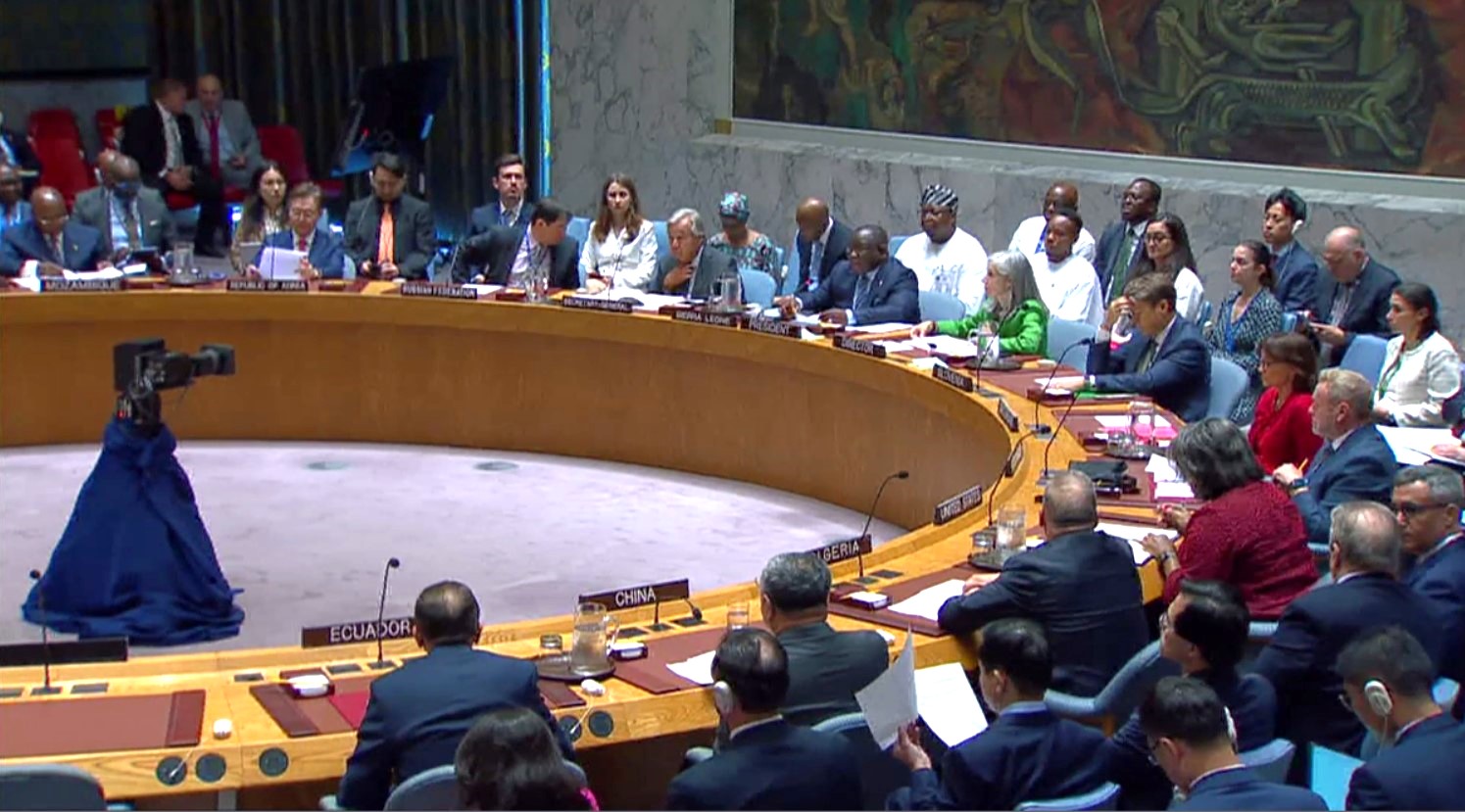
Under the Charter of the United Nations, the Secretary-General is appointed by the General Assembly upon the recommendation of the Security Council. A formal recommendation requires the support of at least nine Council members and must not be vetoed by any permanent member. In practice, this means that the selection process has two thresholds:
The first is securing sufficient support;
The second—and more difficult—is avoiding a veto by any permanent member.
A candidate may receive support from many countries yet still be unable to advance because of opposition from a permanent member. Conversely, a candidate may not be every country’s preferred choice, yet could ultimately prevail because all sides find that person acceptable. The next Secretary-General, therefore, may not necessarily be the candidate with the most support.
He or she is more likely to be:
Someone who can secure at least nine votes without prompting any permanent member to exercise its veto.
“No veto from any of the P5” does not mean “enthusiastic, unanimous support from all five.” Some may actively support the candidate, while others may simply find the person acceptable or choose not to stand in the way.
In selecting a Secretary-General, however, this minimum level of common acceptance is often more important than open and enthusiastic support.
What if none of the current candidates can clear the P5 hurdle? That is precisely the political context in which a new consensus candidate could emerge.
If the leading candidates continue to receive multiple “discourage” votes in subsequent rounds; if those votes include potential vetoes by permanent members; and if the principal contenders remain unable to overcome their respective political obstacles, then the question facing Security Council members may begin to change.
The question would no longer be simply:
“Which of the current candidates has the most support?”
Instead, it could become: “Is there someone outside the current field whom all five permanent members could accept?” Such a person may never have announced a candidacy, participated in the earlier straw polls, or even been identified by the international media as a serious contender.
Yet if that person possesses sufficient international standing, diplomatic skill, and experience in United Nations affairs—while remaining clear of every permanent member’s political red lines—he or she could acquire special value in a deadlock. A new figure may emerge not because that person is stronger than the current candidates, but because:
This person may be able to solve a problem that the current candidates cannot.
A new figure may not be a “dark horse,” but rather a “consensus candidate.” If someone who has not previously entered the race suddenly joins the selection process, observers may be quick to call that person a “dark horse.” Yet within the political logic of selecting a UN Secretary-General, “consensus candidate” may be the more accurate description.
A “dark horse” usually refers to an initially overlooked contender who unexpectedly overtakes the others. The new figure envisioned here, however, may not need to defeat every existing candidate in an open contest.
That person’s true advantage may be this:
Not the first choice of any one side, but also not someone any side feels compelled to block.
He or she may not inspire the strongest support, but may face the least opposition; may not have entered the race first, but could become the compromise solution when all sides reach an impasse.
In international politics, a person capable of becoming a consensus choice is often not the one who most strongly represents any single side, but one who leaves room for parties with differing positions.
The UN Secretary-General must both fulfill the independent responsibilities conferred by the UN Charter and mediate among the interests of major powers and amid international conflicts. The final choice must therefore possess not only ability and stature, but also broad political acceptability.
Not Having Entered the Race Could Actually Be an Advantage
Declaring a candidacy early gives a contender more time to present a vision, build support, and undergo scrutiny by Member States. Yet when divisions among the P5 are pronounced, entering too early may also expose a candidate’s political positions, diplomatic relationships, and potential vulnerabilities, allowing opposition to accumulate over multiple rounds of voting.
By contrast, someone who has not formally entered the race may not have been prematurely associated with a particular country or political bloc, nor developed a fixed pattern of support and opposition in earlier straw polls.
If the current field reaches a deadlock, a new name may first surface through informal diplomatic contacts. The countries involved may quietly test the reactions of other Security Council members—particularly the P5—and a formal nomination may come only after the individual is found to have a certain level of political acceptability.

Therefore, if a new consensus candidate does emerge, the candidacy may appear sudden, but the diplomatic consultations that brought the name forward may have begun much earlier.
Gender and regional considerations remain relevant following Bachelet’s withdrawal, which has again altered the dynamics of the race. She served twice as President of Chile and later as United Nations High Commissioner for Human Rights, combining several significant identities: a woman, a Latin American political leader, and a former senior UN official. Her withdrawal does not mean that the questions of female leadership at the United Nations or Latin American regional representation have disappeared.
In more than eight decades of United Nations history, no woman has ever served as Secretary-General. At the same time, calls for the next Secretary-General to come from Latin America and the Caribbean remain strong. If a new consensus candidate later emerges, gender and regional background may therefore remain important considerations.
These factors alone, however, cannot guarantee selection.
A person may satisfy expectations concerning regional rotation and female representation yet still face a veto because of political experience, policy positions, or relationships with certain countries.
If a new consensus candidate emerges, that person may need to possess several qualities at once: substantial international experience, the ability to manage complex crises, political credibility across regions, and—most importantly—freedom from being regarded as unacceptable by any permanent member.
High-Level Week Could Become a Critical Window for Observation
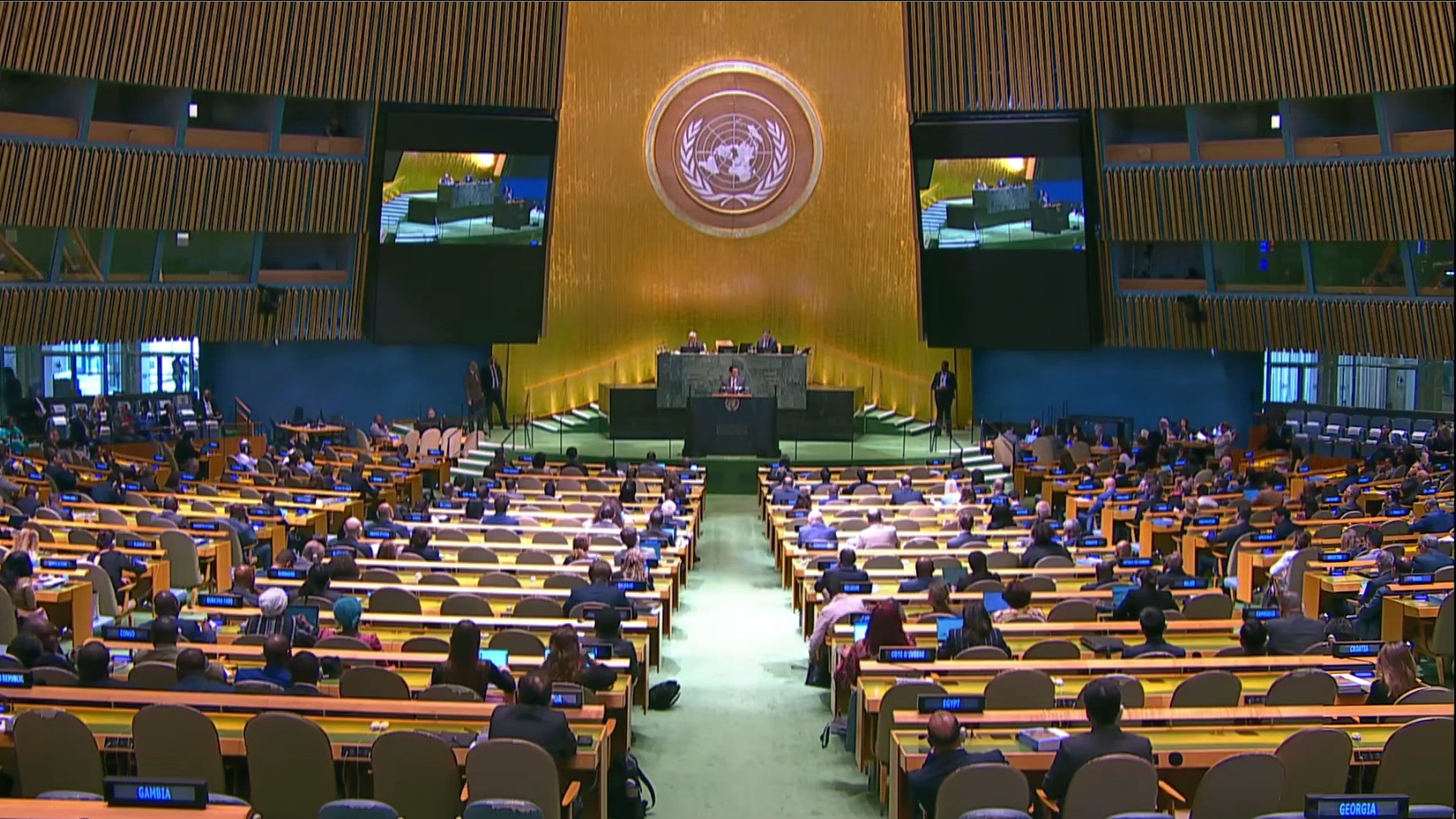
The third straw poll took place just before the High-Level Week of the 81st session of the United Nations General Assembly. During High-Level Week, numerous heads of state, heads of government, and foreign ministers gather in New York for intensive bilateral and multilateral meetings. This gives candidates for Secretary-General an important opportunity to build support, address concerns, and reduce opposition. Although the decisive screening takes place in the Security Council, High-Level Week also provides diplomatic space for countries to exchange views privately and assess the political viability of the candidates.
Whether the current candidates can use this opportunity to reduce opposition will be the first signal to watch. At the same time, if governments increasingly conclude that the current field is unlikely to produce a candidate whom none of the P5 would veto, High-Level Week could also provide an opportunity to test other names. Such soundings may not immediately take the form of a formal nomination. They may begin instead with an informal question:
If the current candidates cannot produce a consensus, is there someone else whom all sides could accept?
What deserves attention during High-Level Week, therefore, is not only which national leaders the current candidates meet, but also whether names previously absent from public discussion begin to surface in diplomatic conversations.
For now, this remains a possibility, not an established fact. To date, there is no public evidence that a person who has not entered the race has secured the acceptance of the P5, nor can it be assumed that a new candidate will necessarily emerge.
If one of the current frontrunners can reduce opposition, broaden support through subsequent diplomatic engagement and straw polls, and ultimately avoid a P5 veto, there will be no need to look beyond the current field. But if the existing candidates remain unable to overcome their respective political obstacles, the search for a new consensus candidate could move from a theoretical possibility to a practical political option.
If such a new figure emerges, the significance would extend beyond merely adding another name to the list. It would likely indicate that some Security Council members have begun to conclude that the current field cannot produce a final consensus.
The real suspense is not about who is temporarily ahead. What matters in the next stage is not simply whether a candidate gains or loses a vote in the next round, but three more consequential signals:
First, whether support begins to consolidate clearly around one or two candidates;
Second, whether opposition to the current candidates declines, particularly whether they can avoid opposition from the P5;
Third, whether diplomatic discussions begin to include a new figure who has never entered the race but whom none of the five permanent members may be willing to veto.
If a current frontrunner can move from “leading in the vote count” to “being accepted by all sides,” a new candidate may never emerge. But if the current candidates remain unable to overcome opposition from key countries, the Security Council may ultimately look not for the person with the greatest public support, but for someone whom no permanent member is determined to veto.
This is the central question now surrounding the selection of the next United Nations Secretary-General: Could the next Secretary-General be someone who has never entered the race, but emerges from the deadlock as the consensus choice?
There is no answer yet. But High-Level Week may begin to bring that answer into clearer focus.
Editor’s Note: This commentary was prepared on the basis of publicly available United Nations materials and open-source media reports. Its discussion of the direction of the selection process and of a potential consensus candidate constitutes analysis and assessment; it does not indicate that any new candidate has been formally nominated or endorsed by the five permanent members of the Security Council.