 Celebrity Media TV
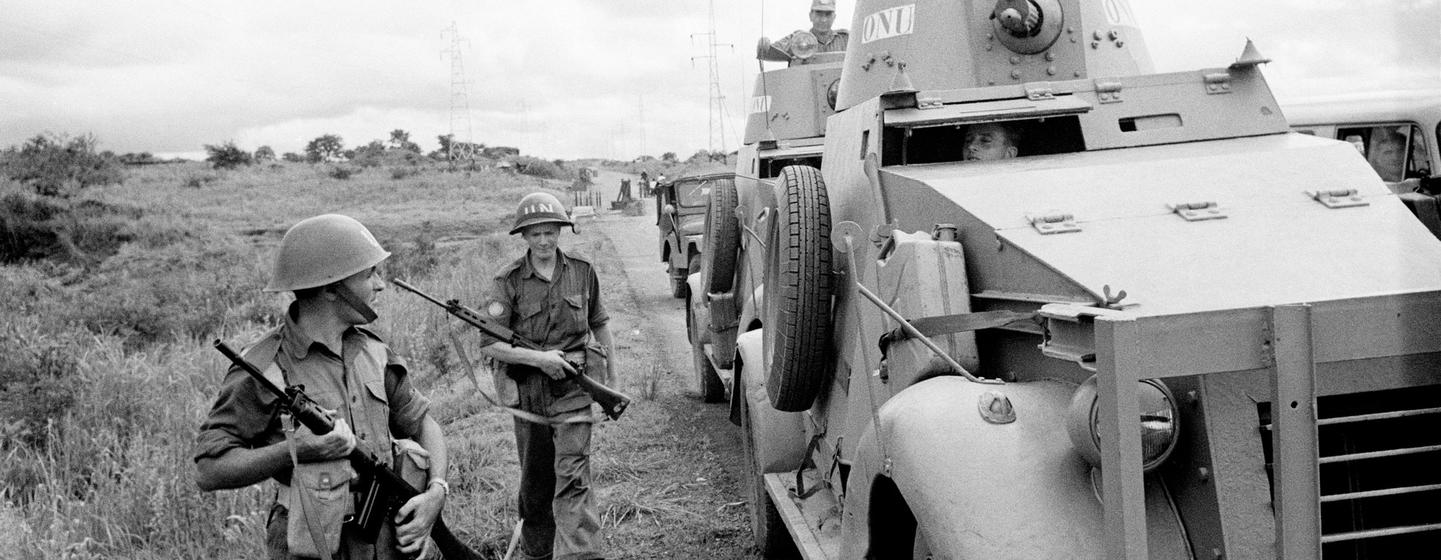 UN Photo Units of the UN Force in the Congo (ONUC) secured positions outside the perimeter of Elisabethville in 1963. (file)
Regional conflicts, murderous militias, the exploitation of natural resources, innocent civilians forced to flee their homes; these recent developments in the eastern Democratic Republic of Congo (DRC) are just the latest in the central African nation’s troubled history.
DRC gained independence in 1960 and since then the UN has played a crucial role in the country, notably through the deployment of three peacekeeping missions.
Here are four essential things to know:
1. A UN presence since independence
The UN intervened for the first time in DRC just a few weeks after the country gained independence on 30 June 1960, following 75 years of Belgian colonial domination.
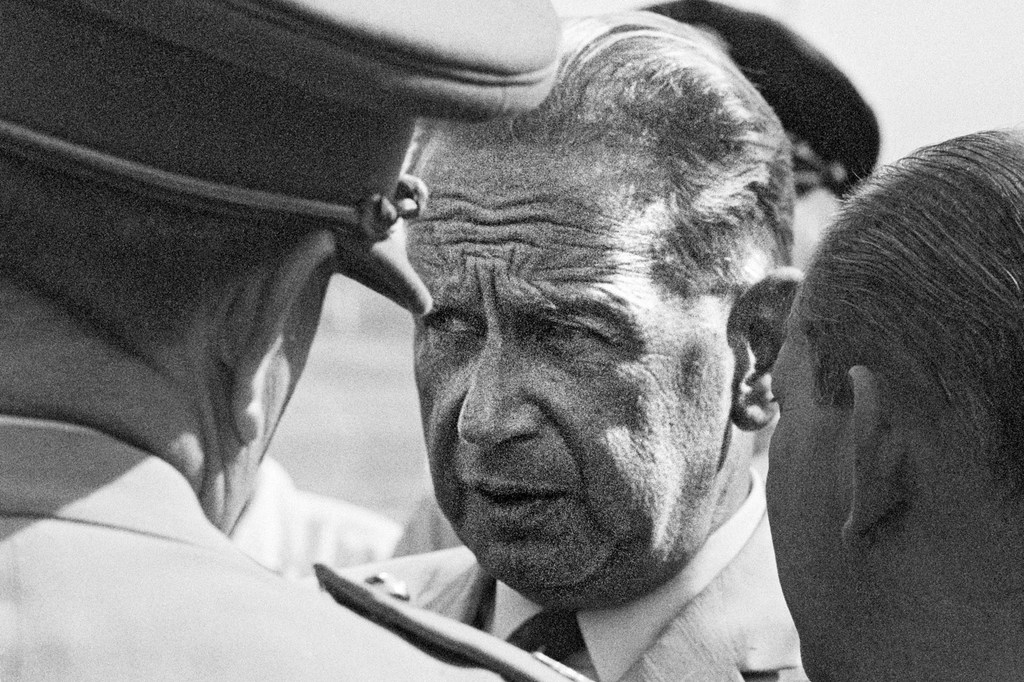 UN Photo UN Secretary-General Dag Hammarskjöld confers in Elisabethville (now Lubumbashi) after talks with Katanga and Belgian representatives about withdrawing Belgian troops and deploying UN peacekeepers. (file)
During colonial rule the country was exploited for its natural resources and its workforce without any real preparation for political autonomy.
As early as July 1960, independence was threatened by the secession of two mineral-rich provinces – Katanga and South Kasai.
The latter benefitted from the support of Belgium and foreign economic interests, eager to maintain control over the country’s resources.
The country then sank into a major political crisis, marked by the assassination of its Prime Minister, Patrice Lumumba, in 1961.
Faced with this situation, the UN deployed the UN Operation in the Congo (ONUC) in July 1960 .
The first large-scale peacekeeping mission, ONUC aimed to help the government in Leopoldville – the former name given to the capital, Kinshasa – to restore order and unity in the country and to ensure the withdrawal of Belgian troops.
The mission, which numbered 20,000 peacekeepers at its peak, played a key role in ending the Katanga secession in 1963 before withdrawing in 1964.
 UN Photo Ghana first deployed troops as part of a UN peacekeeping operation set up to help restore calm and order in the then Republic of Congo (ONUC). (file)
2. MONUC: A response to Congolese wars
After more than 30 years of dictatorship under the rule of Mobutu Sese Seko, the country, then renamed Zaire, fell into two successive conflicts – the “first” (1996-1997) and the “second” (1998-2003) Congo Wars.
In 1996, Rwanda, supported in particular by Uganda and Burundi, intervened in eastern Zaire, officially to drive out Hutu militias responsible for the 1994 genocide against the Tutsis, who had taken refuge in the provinces of North and South Kivu.
In May 1997, with military support from Kigali and Kampala, Laurent-Désiré Kabila seized power, forcing Mr. Mobutu into exile and renamed the country the Democratic Republic of the Congo.
In 1998, Mr. Kabila turned against his former Rwandan and Ugandan allies, who were supporting rebellions in the east of the country. For his part, he benefitted from the support of Angola, Zimbabwe and Namibia.
Following the signing of the Lusaka Ceasefire Agreement in 1999, the UN deployed the UN Organization Mission in DRC (MONUC) to oversee its implementation.
Even after the official end of the war in 2003, DRC remains a strategic issue for regional powers due to its exceptional natural resources and its key role in the stability of the Great Lakes region.
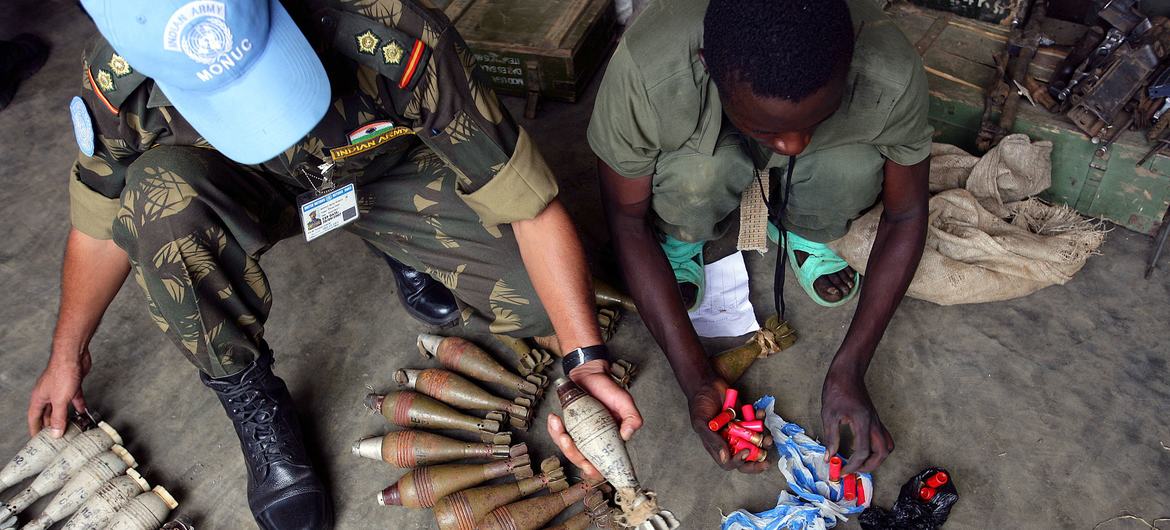 UN Photo/Martine Perret Weapons and ammunition collected during a demobilisation process in DRC.
3. MONUSCO: A mission still present
In 2010, MONUC became the UN Organization Stabilization Mission in DRC (MONUSCO) with an expanded mandate, including the protection of civilians and support to the Congolese government in strengthening peace and stability.
Still recently deployed in the three eastern provinces of the country, namely North Kivu, South Kivu and Ituri, MONUSCO had proceeded, at DRC’s request, to withdraw its troops from South Kivu in June 2024 and was poised to completely disengage by the end of the year.
However, also at the government’s request, the Security Council extended in December MONUSCO’s mandate through the end of 2025.
Despite UN efforts, several armed groups continue to operate in the area, including the Allied Democratic Forces (ADF) and the March 23 Movement, or M23 armed group, which defends the interests of Congolese Tutsi and benefits from the support of Rwandan forces.
Since the beginning of 2025, M23 and the Rwandan army have been responsible for the latest outbreak of violence in the east of the country, where they occupy several strategic towns in North and South Kivu.
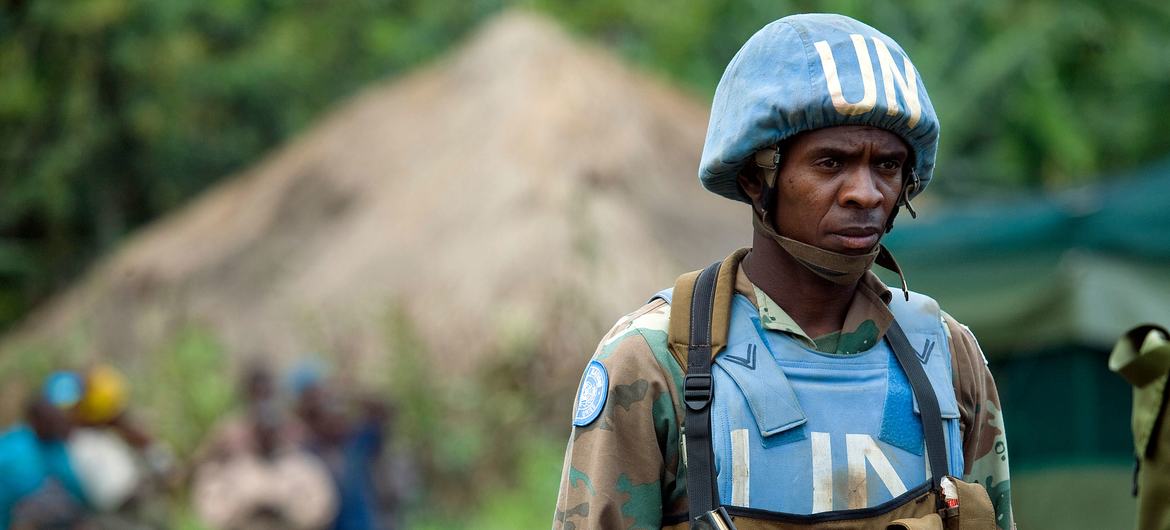 UN Photo/Marie Frechon A member of MONUC’s South African parachute battalion on patrol duties around the village of Ntamugenga. (file)
4. Natural resources: A major factor in conflicts
DRC benefits from immense natural resources, particularly in the three eastern provinces, including vast reserves of gold, diamonds and tin, which is used in electronic devices.
North and South Kivu are also rich in coltan, a metal highly coveted by the technology sector because of its use in the manufacture of capacitors found in mobile phones and laptops. DRC is also the world’s leading producer of cobalt, a strategic mineral used in the manufacture of almost all rechargeable batteries in the world today.
These natural resources attract interests in neighbouring countries and are at the heart of conflicts in the region.
Armed groups, such as M23, are accused of illegally exploiting these resources to finance their activities, with the complicity of companies inside and outside the country as well as DRC’s neighbours.
The UN has put in place several initiatives to combat the illegal trade in minerals, including mechanisms to sanction companies involved in this trafficking and an arms embargo to combat their proliferation in DRC.
However, combating illegal exploitation of resources remains a major challenge.