 Celebrity Media TV
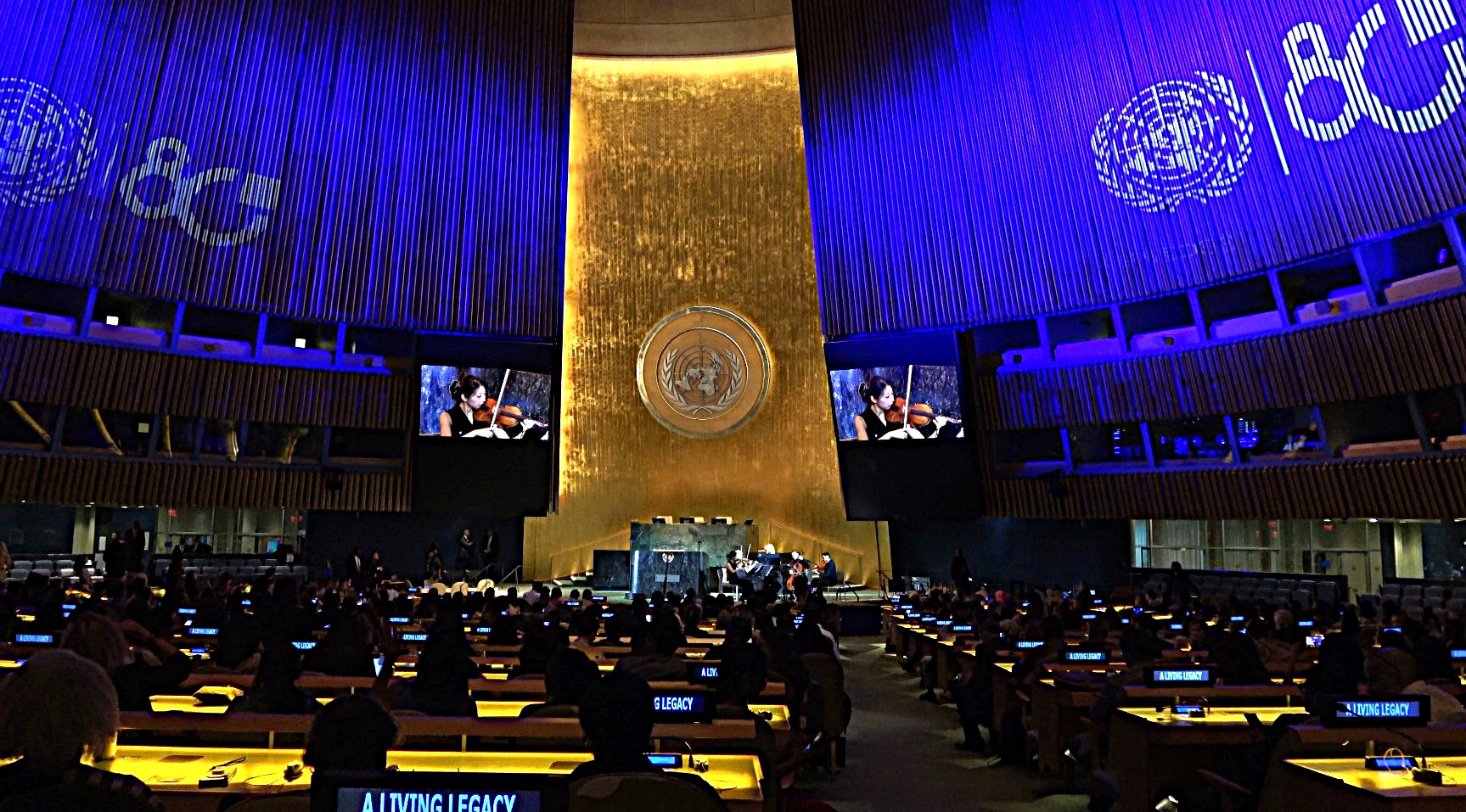
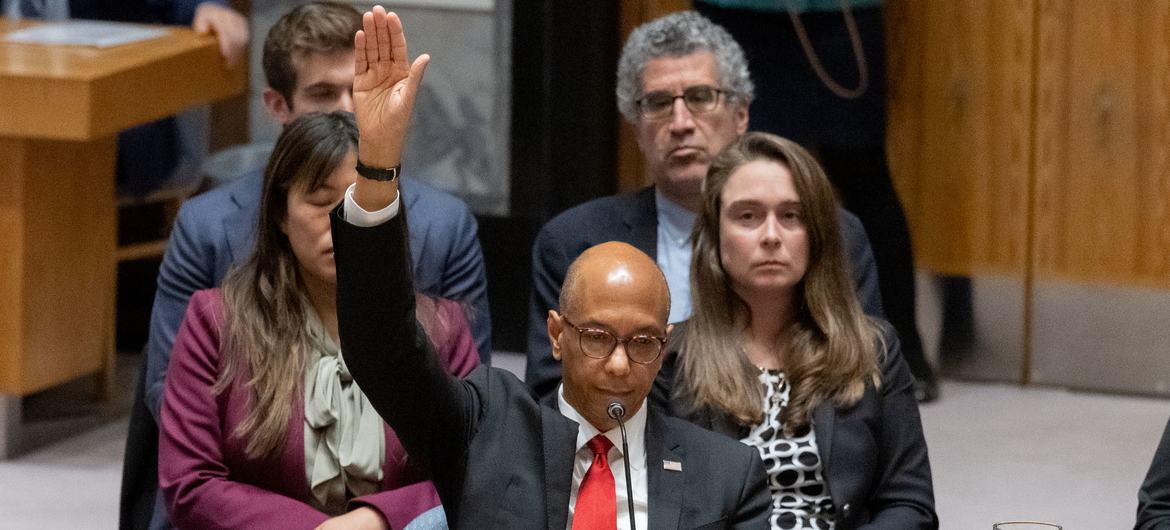 UN Photo/Manuel Elías Robert Wood, Deputy Permanent Representative of the United States to the UN, votes against a draft resolution on Gaza in the Security Council on 18 April 2024. (file)
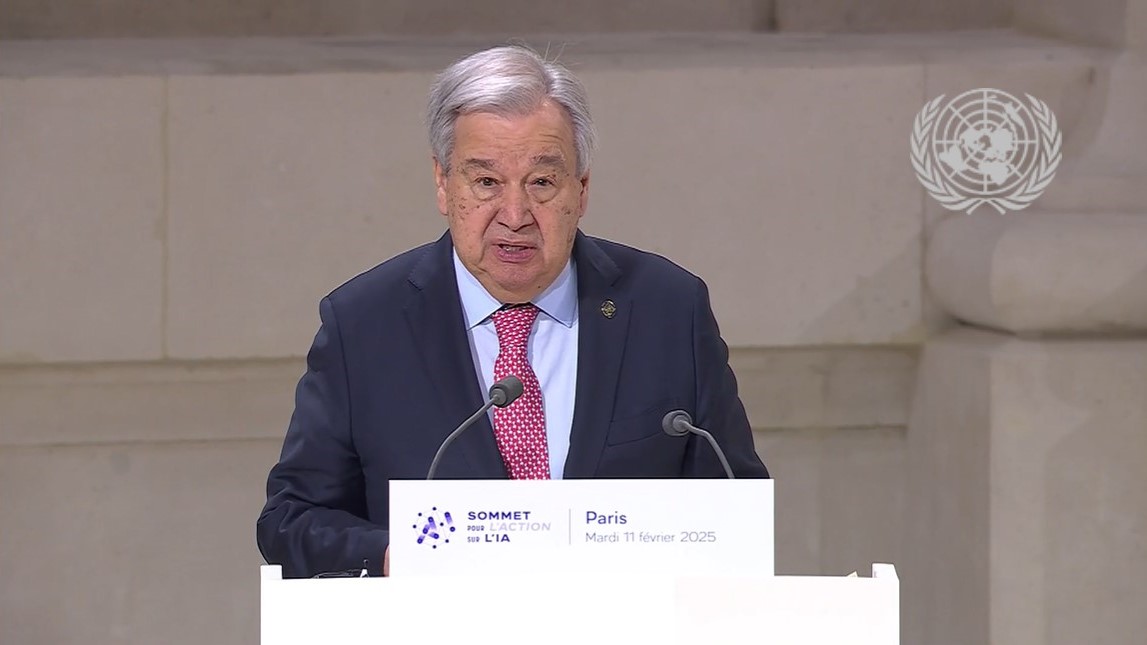
Assembly President Dennis Francis emphasised that the Security Council remains unable to collectively address critical peace and security situations in the Gaza Strip, Mali, Syria and Ukraine as well as concerning the Democratic People’s Republic of Korea (DPRK).
“At this precarious time of heightened geopolitical tensions and when ongoing and emerging crises demand our urgent and decisive action, it would be a derogation of our duty as the General Assembly if we stood idle and allowed the unrestrained use of the veto to paralyse not only the Council itself but the United Nation’s ability to respond efficiently to questions of peace and security,” he said.
A special voting power, the right to use a veto is held by the permanent member States on the Council, whereby if any one of the five – China, France, Russia, United Kingdom and United States – casts a negative vote, the resolution or decision automatically fails.
Watch the full debate below.
‘Veto initiative’ is a breakthrough
During Tuesday’s debate, many ambassadors pointed out that the veto has been used six times in as many months regarding Palestine and the ongoing war in Gaza, with some calling for urgent Council reform that would further limit or even eliminate the veto privilege.
Opening the debate, Assembly President Francis said the world body and the Council are expected “to work in unison and dedicated to one overarching purpose: saving succeeding generations from the scourge of war” and that the “veto initiative”, approved by the General Assembly in its resolution 76/262, is “a significant breakthrough to involve the entire membership on these issues”.
Underlining the pronounced contrast between the urgent need for decisive action and the prevailing inaction, which undermines the UN’s work and credibility, he said that perhaps, despite Council deadlock being unacceptable, it is precisely for the reason of its state of paralysis that “we must ramp up momentum”.
“If we do nothing, questions on continued relevance of the United Nations will escalate, and public confidence in this institution will increasingly dwindle, with each veto cast perceived as our collective failure to act.”
Rise in veto use
Since the UN's inception, vetoes have been used 320 times.
Vetoes have been used 13 times since the General Assembly adopted a resolution designed to foster greater cooperation with the Security Council following Russia’s full-scale invasion of Ukraine in early 2022.
Tabled by Liechtenstein, the resolution states that anytime the veto is used in the Security Council, it automatically triggers a meeting and debate in the General Assembly to scrutinise and discuss the move in a bid to give UN Member States the chance to make recommendations.
As with all Assembly resolutions, they carry moral and political weight, but are non-binding and do not generally carry the force of international law, unlike some measures agreed by the Security Council.
Many of the more than 50 ambassadors at Tuesday’s debate highlighted cases of veto use, with some permanent Council members defending their right to the privilege.
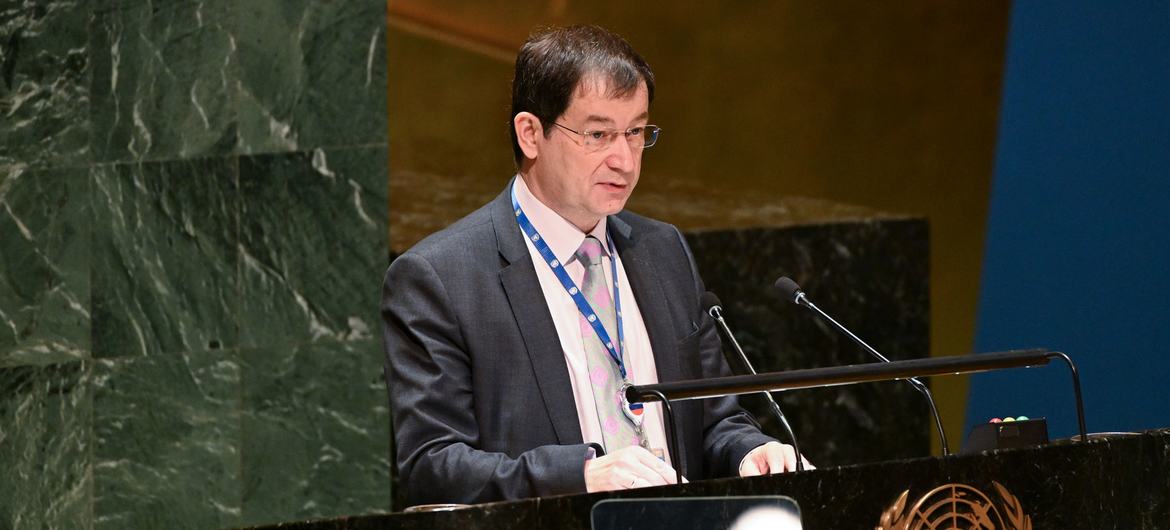
Russia: Veto is ‘the cornerstone’ of the UN
Deputy Permanent Representative of Russia Dmitry Polyanskiy said resolution 76/262 was conceived of as self-promotion for the penholder.
He said the US has used its veto four times to ensure Israel remains “unimpeded” in its operations in Gaza and regarding Palestine’s bid for UN membership and continues to do so, contrary to the will of the majority of UN Member States.
However, Russia and China’s veto of a US draft allowed the Council to adopt a resolution tabled days later by its 10 non-permanent members, calling for a ceasefire for Ramadan.
“Accordingly, it was the only right thing to do, and it reflected the will of the overwhelming majority of members of the international community,” he said. “That situation is the best possible response to those that criticise the existence of the veto for permanent members.”
The veto right is the “cornerstone” of the entire UN architecture, and without it, the Council would become “an organ that rubberstamped dubious decisions imposed by a circumstantial majority that would be practically impossible to implement”, he said, adding that a veto is “the most extreme measure” when other options have been exhausted and an inalienable right, and its use does not violate anything.
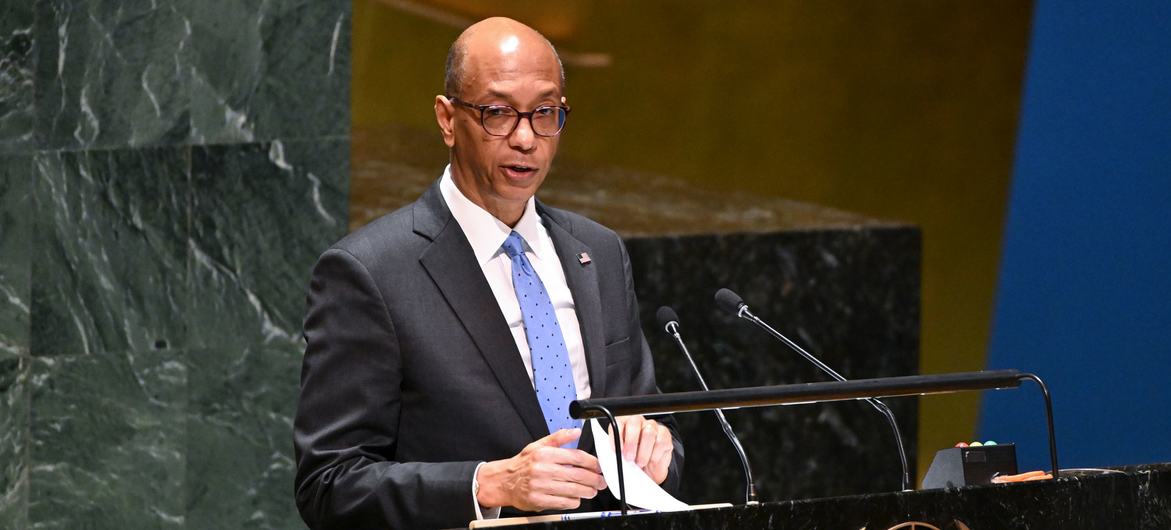
United States: Veto initiative is ‘an important innovation’
Deputy Permanent Representative of the United States Robert Wood said the veto initiative is an important innovation, with the five permanent Security Council members bearing their special responsibilities.
Since the initiative’s adoption, the US has taken the opportunity to explain its positions when meetings are convened or during meetings of the 10th emergency special session.
“We recognise the veto is at times controversial,” he said. “This is why the veto initiative is so important to increase transparency and accountability on one of the most contentious aspects of the Security Council’s operations.”
He said the US looks forward to continuing to engage openly and candidly on this challenging issue.
What happens when a veto is cast in the Security Council?