 Celebrity Media TV

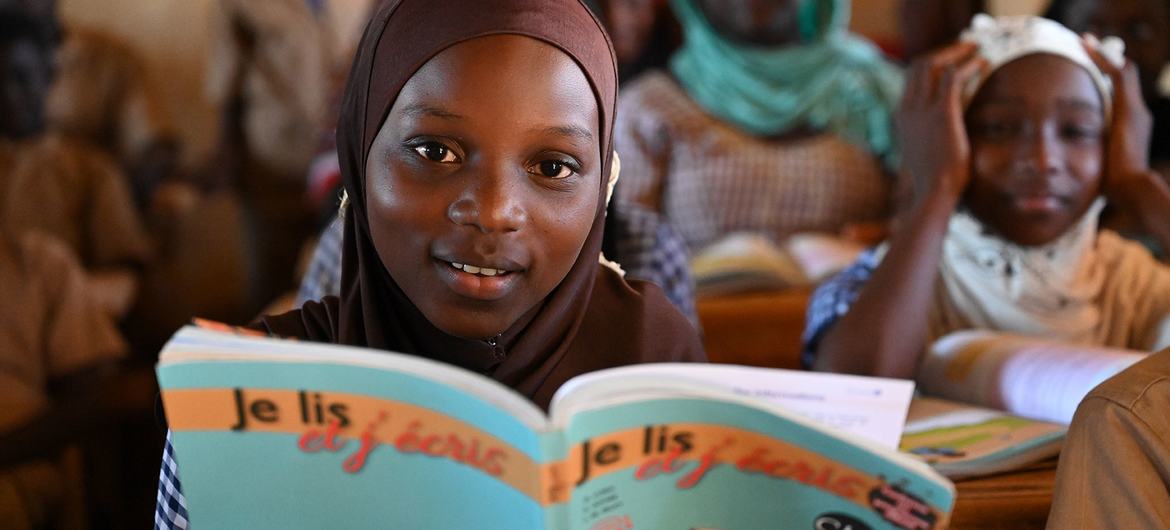
African leaders gathered in Mauritius on Thursday, to mull solutions to the education gap highlighted by a new UN education agency report which shows children on the continent are five times less likely to learn the basics, than those living elsewhere.
The ability of education systems to ensure even rudimentary literacy skills for their students has declined in four out of 10 African countries over the last three decades.
The findings are published in the first of a three-part series of Spotlight reports on foundational learning in Africa, called Born to Learn, published by the Global Education Monitoring (GEM) Report at UNESCO, the Association for the Development of Education in Africa (ADEA) and the African Union.
Manos Antoninis, Director of the GEM Report, said while every child is born to learn, they can’t do so if they’re hungry, lack textbooks, or don’t speak the language they’re being taught in.
Lack of basic support for teachers is another key factor.
Lessons for all
“Every country needs to learn too, ideally from its peers”, added Mr. Antoninis. “We hope this Spotlight report will guide ministries to make a clear plan to improve learning, setting a vision for change, working closely with teachers and school leaders, and making more effective use of external resources”.
The report includes data from accompanying country reports developed in partnership with ministries of education in the Democratic Republic of the Congo (DRC), Ghana, Mozambique, Rwanda and Senegal and a series of other case studies on the continent.
“Africa has a complex past that has left parts of it with linguistic fragmentation, conflict, poverty and malnutrition that have weighed heavily on the education systems’ ability to ensure universal primary completion and foundational learning”, said Albert Nsengiyumva, the Executive Secretary of ADEA.
New opportunity
“Our partnership is shining a spotlight on this issue together with education ministries to help find solutions that work. The social and economic consequences of low learning outcomes are devastating for Africa. This report’s findings give us the chance to find a new way forward, learning from each other”.
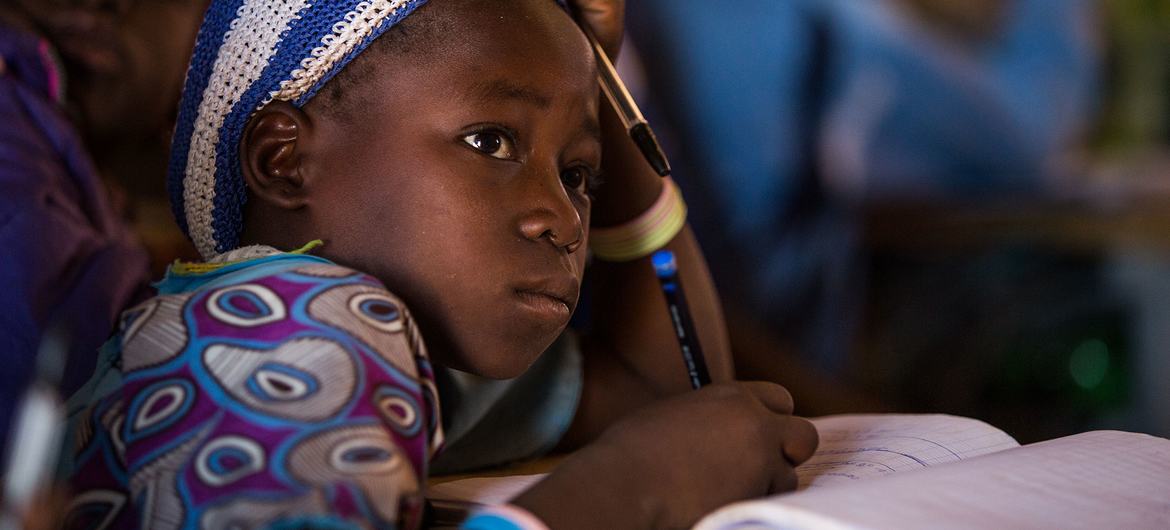
The report finds that, in addition to socioeconomic challenges, the limited availability of good quality textbooks, lack of proper teacher support, inadequate teacher training and provision of teacher guides, were a bar to progress across sub-Saharan Africa.
Hopeful signs
Recent interventions show progress is possible, if efforts are focused on classroom practices that are evidence based.
Positive practices highlighted in the report and other experiences will be fed into a peer-learning mechanism on foundational learning, hosted by the AU that has been launched alongside the eport, the Leveraging Education Analysis for Results Network (LEARN), building on the Continental Education Strategy for Africa clusters.
Mohammed Belhocine, African Union Commissioner for Education, Science, Technology and Innovation said the COVID-19 pandemic had thwarted efforts to ensure all children have fundamental skills in reading and maths.
“This is why a focus on basic education within our continental strategy’s policy dialogue platform is warranted. The work of thenew LEARN network on basic education within the AU launched this week will draw from the experiences of countries that have taken part in the Spotlight report series”.
Key recommendations:
- Give all children a textbook: Ensure all children have learning materials, which are research-based and locally developed. Having their own textbook can increase a child’s literacy scores by up to 20%. Senegal’s Lecture pour tous project ensured textbooks were high quality. Benin is celebrated for its system-wide curriculum and textbook reform that has provided more explicit and direct instruction for teachers.
- Teach all children in their home language: Give all children the opportunity to learn to read in the language they understand. In 16 out of 22 countries, at most, one third of students are taught in their home language. Mozambique’s recent expansion of bilingual education covers around a quarter of primary schools, with children learning under the new approach achieving outcomes 15 per cent higher than those learning in one language.
- Provide all children with a school meal: Give all children the minimum conditions to learn: zero hungry pupils in school. Today, only one in three primary school students in Africa receive a school meal. Rwanda has committed to deliver school meals to all children from pre-primary to lower secondary education, covering 40 per cent of costs.
- Make a clear plan to improve learning: Define learning standards, set targets and monitor outcomes to inform the national vision. There is no information on the learning levels of two-thirds of children across the region. This represents 140 million students. The Ghana Accountability for Learning Outcomes Project, is working on a framework for learning accountability.
- Develop teacher capacity: Ensure all teachers use classroom time effectively through training and teacher guides. A recent study covering 13 countries, 8 of them in sub-Saharan Africa, found that projects with teacher guides significantly increased reading fluency.
- Prepare teacher-leaders: Restructure support mechanisms offered to teachers and schools. The Let’s read programme in Kenya, which combined school support and monitoring with effective leadership has seen improvements equivalent to one additional year of schooling for children.
- Learn from peers: Reinvigorate mechanisms for countries to share experiences on foundational literacy and numeracy.
- Focus aid on institution building: Shift from projects to provision of public goods that support foundational learning