 Celebrity Media TV
A New Journey in Search of the Two Airlines Forebears' Path of Service to the Nation — An Account of Descendants of the Two Airlines Uprising Visiting Their Forebears' Footsteps: The 2026 Guangdong–Hong Kong Journey
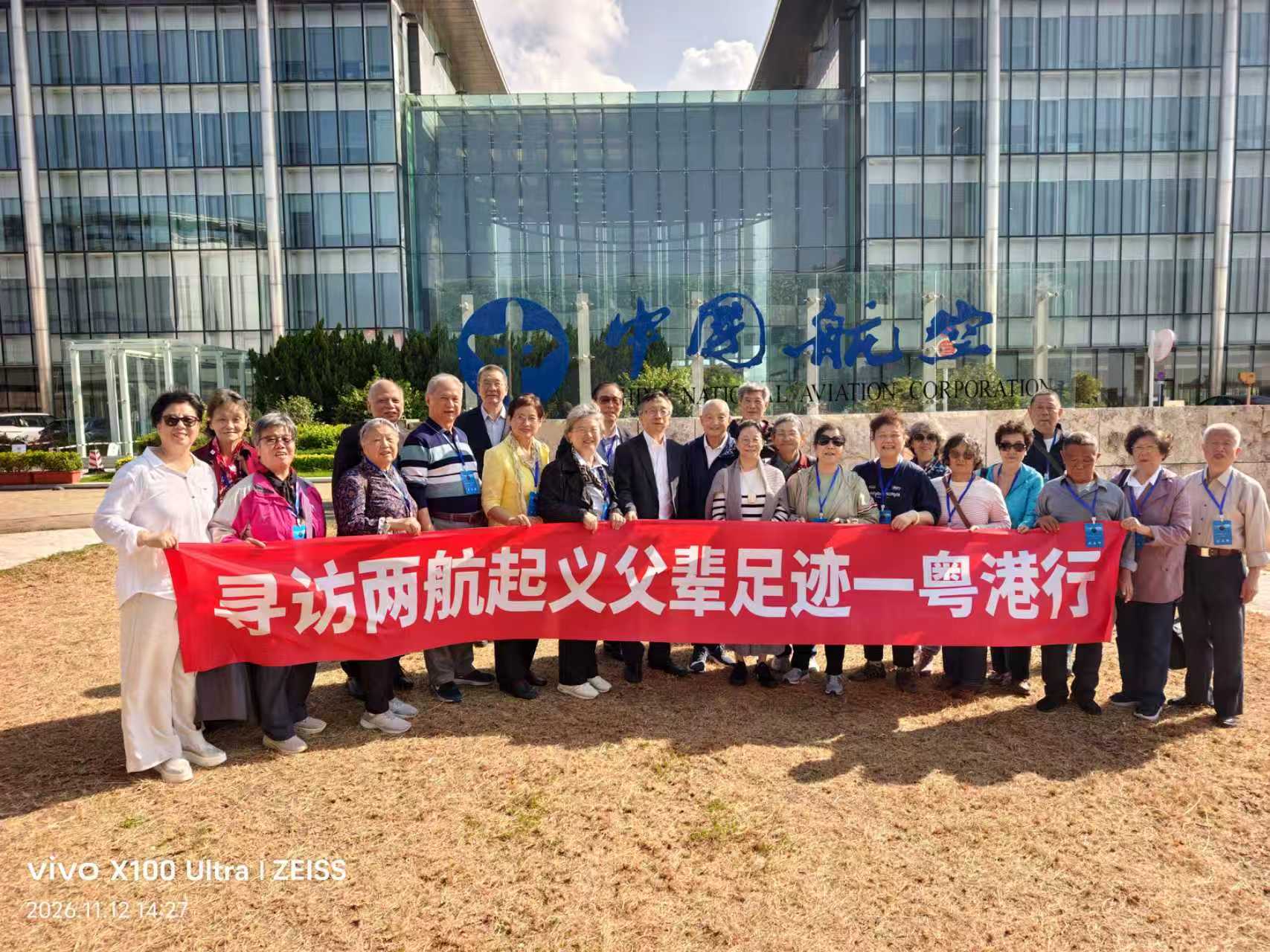
The visiting group in a group photograph with Sun Yu, vice president of the Hong Kong CNAC Group (front row, seventh from left), and Liu Song, deputy general manager of CNAC (Hong Kong) (back row, second from left), in front of the CNAC office building. The “中” airline emblem, first put into use when the Hump airlift began in 1942, is still in use today.
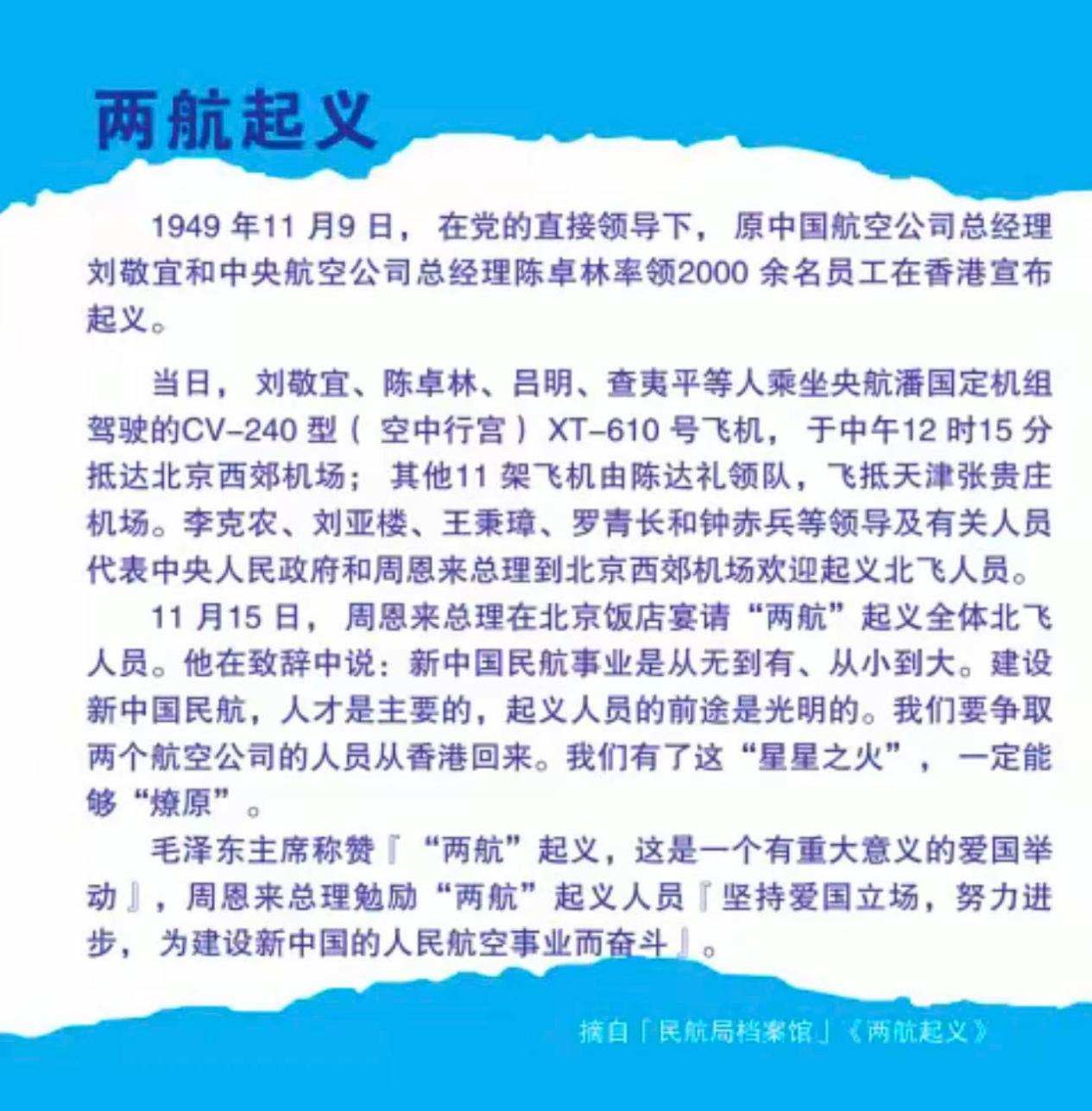
On November 10, 2026, more than twenty members of the second generation of the Two Airlines, now in their seventies, gathered in Guangzhou to form a visiting group and set out on the 2026 Guangdong–Hong Kong journey in search of their Two Airlines Uprising forebears' footsteps. A considerable number of the group members had only the day before taken part in the commemoration of the seventy-seventh anniversary of the “Two Airlines” Uprising in Tianjin, one of the destinations of the northward flight. From January 2024 to the present, the descendants of the Two Airlines, seeking the traces of their forebears' service to the nation in the War of Resistance and the uprising, have already travelled through Yunnan; the Nanjing–Shanghai–Hangzhou region; Tianjin, Shanghai, Hangzhou, Zhijiang and Anhui; Taiyuan; and other places. This time they set out on a new journey.
At noon on the day they arrived in Guangzhou, the visiting group was warmly welcomed and received by leading officials of the two levels of organizations that administer Baiyun Airport (Lin Suling, deputy secretary of the organ Party committee of Guangdong Airport Management Group Co., Ltd.; Yang Yong, deputy secretary of the Party committee and chairman of the trade union of Baiyun Airport Co., Ltd.; and Director Xie of the Party-Mass Work Department) and others, and they visited the well-known Terminal 3. The moment the second-generation visitors from the cold north stepped into the terminal, they felt the warmth of the south and were moved by the hospitality of their hosts. From the observation deck they watched aircraft take off, land and taxi, and viewed at close range Boeing and Airbus models of every type, and aircraft of every airline. Everything before their eyes was truly a world apart from the aircraft and airports their Two Airlines forebears had known more than seventy years ago. In the afternoon the second generation visited the newly built office building of the airport company and the airport operations control center, the body that directs all aircraft taxiing on the ground at Baiyun Airport. After an aircraft lands on a Baiyun Airport runway, and again after it has taken on passengers and taxis toward the runway, it is directed by this center. In the hall, controllers at each ground-control position watched closely the movements of every aircraft at their computers, like traffic police in a city, and with the aid of radar ensured that aircraft taxied on the correct taxiways and docked at the jet bridges.
The next day, the visiting group toured the China Southern Airlines History Museum. There, the guide Wang Jia and Xu Guoji of the second generation of the Two Airlines explained China Southern Airlines' 70 years of development. From this microcosm of China Southern, everyone could see how rapidly the motherland's civil aviation has developed and how greatly it has changed, and could also see the contributions that China Southern's predecessors — that is, the Two Airlines forebears — made to China Southern's growth. Without the solid foundation laid in those years by the fathers of this second generation, there could be no China Southern Airlines of today, nor today's Air China or China Eastern Airlines. The brilliant achievements of these three major airlines today are inseparable from the contributions their fathers made in those years.
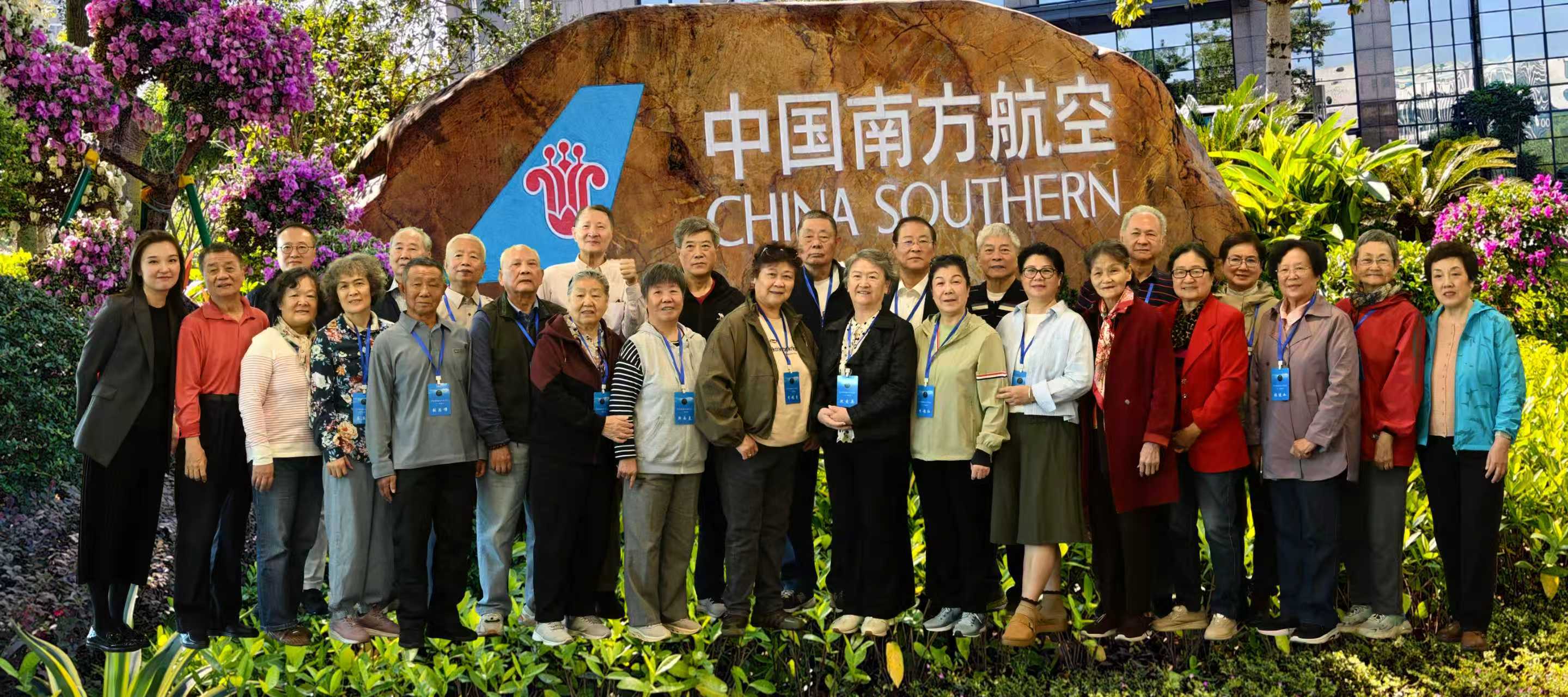
The visiting group in a group photograph in front of the name stone of the China Southern Airlines Building
The visiting group then toured the old terminal building of the August 1 inaugural flight ceremony of 1950. Shu Guoqiang, office director of the China Southern Airlines Media Company, which now works in this building, welcomed our arrival, and Zeng Xiaoyan, the media company's chief art director, accompanied the second generation on the visit, before the black-and-white photographs around the hall. Xu Guoji shared with everyone the circumstances of the August 1 inaugural flight 76 years ago and the stories in the old photographs.
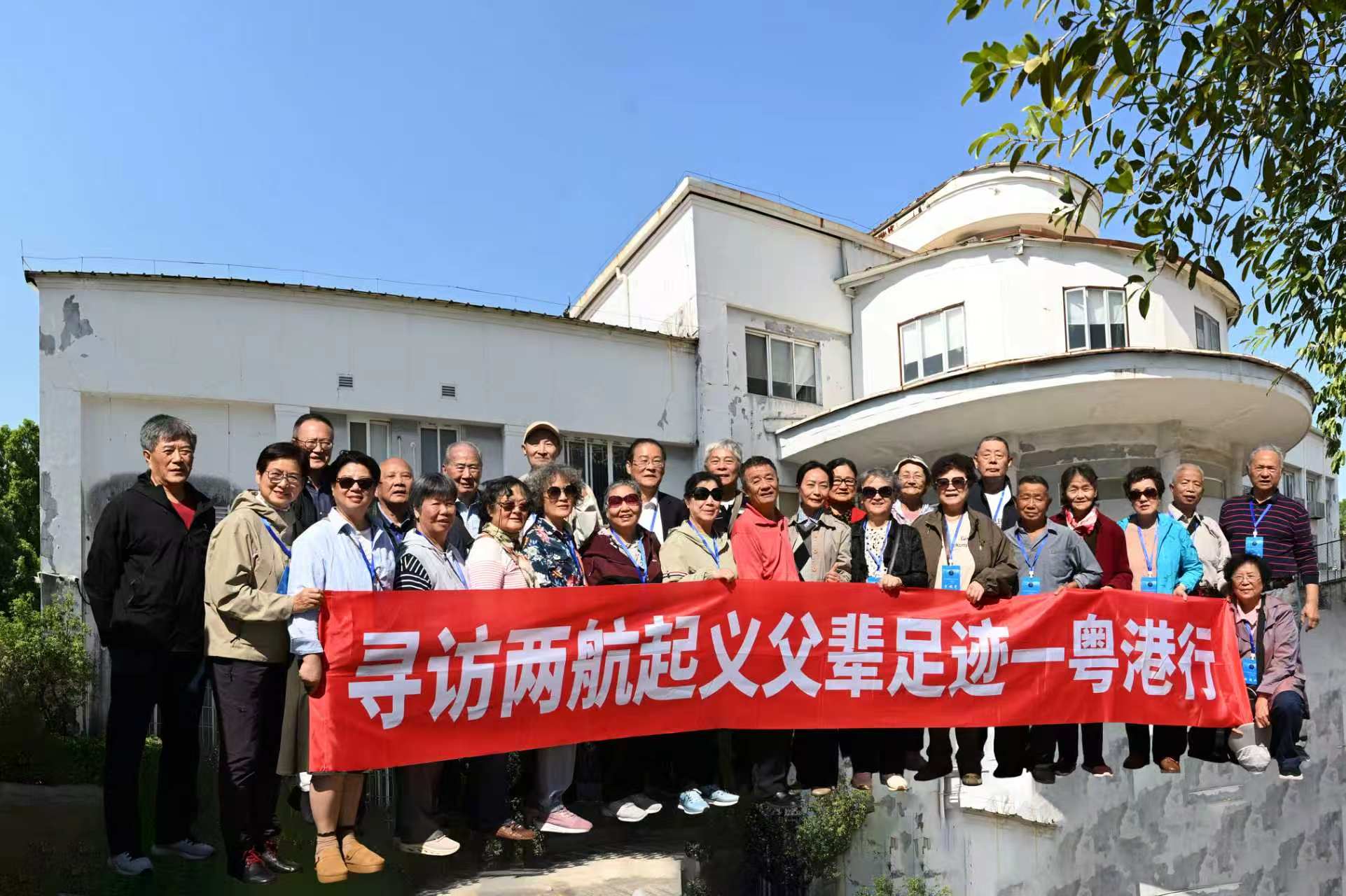
The visiting group in a group photograph in front of the old terminal building of the August 1 inaugural flight ceremony
After the visit, the group hurried on to Hong Kong and began the centerpiece of this journey — going to the starting point of the Two Airlines Uprising's northward flight to seek the traces of their forebears. That evening they stayed at the “Qihang 1331” hostel at the former Kai Tak Airport, on the apron connecting to the old runway.
Early on the morning of the 12th, the descendants of the Two Airlines Uprising, facing the sunrise glow rising in the direction of the Lei Yue Mun Gap and the mild sea breeze blowing in from the water, stood in the place where their uprising forebears had once striven and set foot on the old runway of the northward flight, their hearts surging like tossing waves.
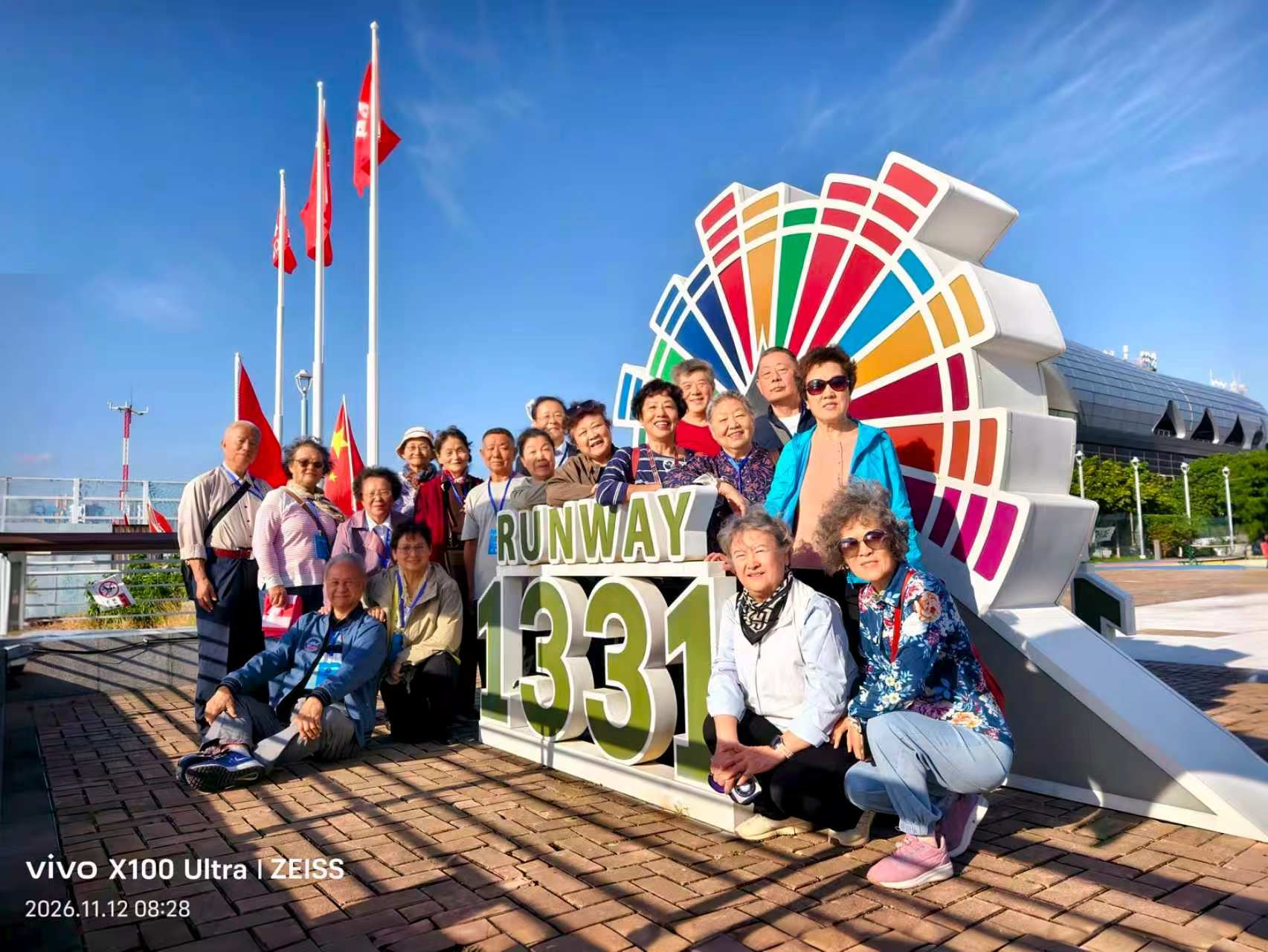
The visiting group in a group photograph at the seaward end of Runway 13/31 of the old Kai Tak Airport
At noon, Zhou Yongheng, Deputy Director-General of the Civil Aviation Department of Hong Kong, lunched and talked with the visiting group of the second generation of the Two Airlines, Sun Yu, vice president of China National Aviation Corporation (Group) Limited (Hong Kong CNAC), Liu Song, deputy general manager, and Wu Junjie, president of the Hong Kong Anti-Japanese War History Research Association. After the meal, the visiting group toured the Civil Aviation Department's Two Airlines Uprising exhibition hall. Some members of the group were very moved to see photographs of their fathers on the exhibition panels; the group leader, Shen Aiying, saw the book Historical Glory, of which she was editor-in-chief, in a glass display case, and thanked Deputy Director-General Zhou for the importance he had attached to the book.
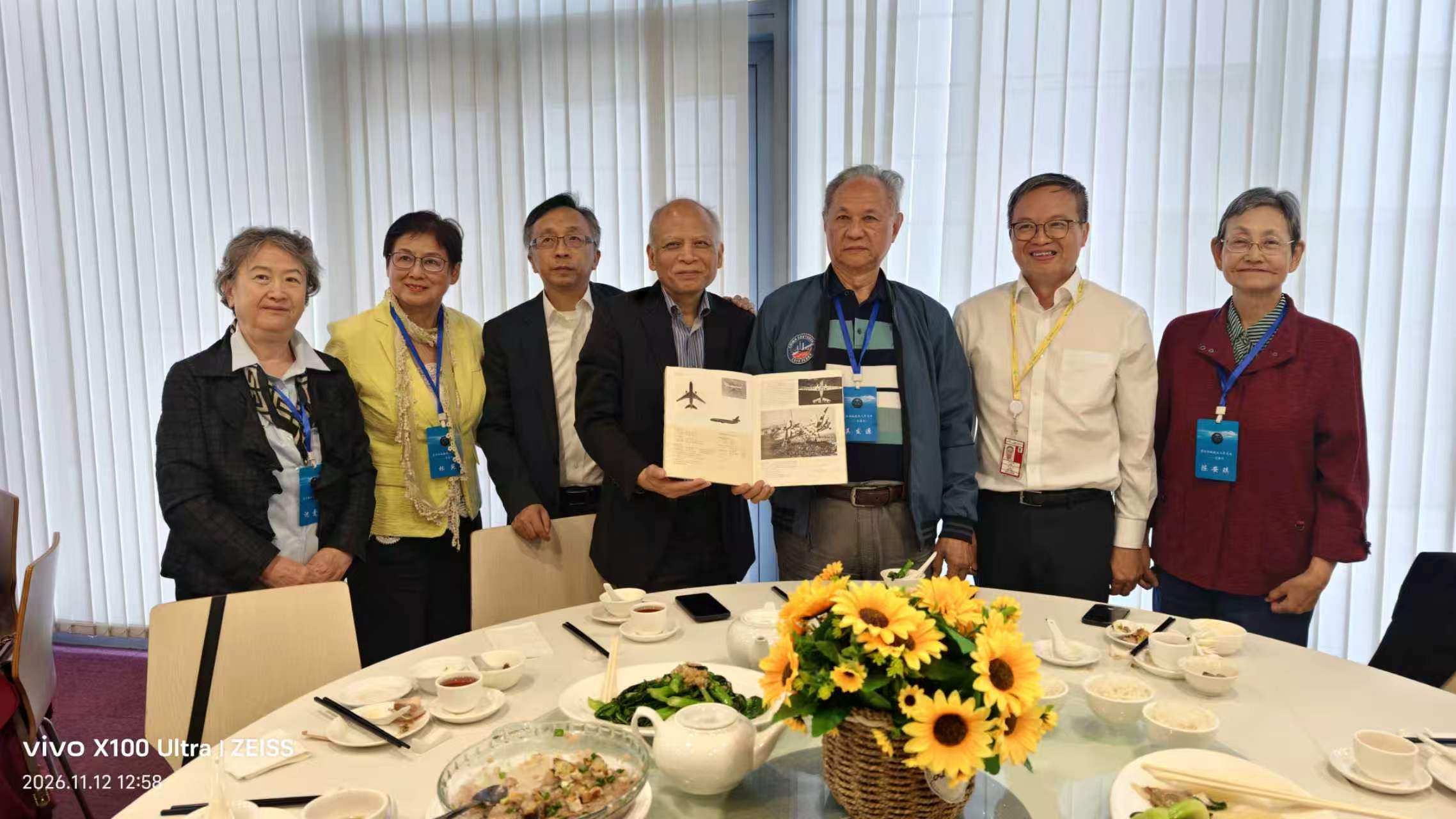
Zhou Yongheng, Deputy Director-General of the Civil Aviation Department, at a lunch exchange and in a group photograph with members of the visiting group and leaders of the Hong Kong CNAC Group. Second from the right — Zhou Yongheng, Deputy Director-General of the Civil Aviation Department; third from the left — Sun Yu, vice president of the Hong Kong CNAC Group; fourth from the left — Liu Song, deputy general manager of CNAC (Hong Kong)
They then toured the “Two Airlines Uprising Exhibition Hall” in the Hong Kong CNAC Building and held a discussion with CNAC leaders. Seeing historical materials and images from the time of their forebears' uprising, the descendants of the Two Airlines Uprising recalled those days with deep feeling and a sense of closeness; the warm reception they received at Hong Kong CNAC felt like a spring breeze, as if they had come home.
On the 13th, Vice President Sun Yu attended on behalf of Hong Kong CNAC the luncheon “Hong Kong Commemoration of the 77th Anniversary of the Two Airlines Uprising — Welcoming the Second-Generation Two Airlines Guangdong–Hong Kong Visiting Group.” Those present included members of the visiting group and the second generation of the Two Airlines in Hong Kong, and leaders including the chairs of the Hong Kong Civil Aviation Union and the Seamen's Union were invited to take part. More than 70 people attended, filling the hall. Sun Yu delivered a welcome: “I am very glad today to welcome in Hong Kong the visiting group of the second generation of the Two Airlines and the second generation of the Two Airlines in Hong Kong, and to join you at this luncheon commemorating the 77th anniversary of the Two Airlines Uprising. On behalf of CNAC, I pay my highest respects to all of you and to your fathers! Seventy-seven years ago the Two Airlines elders resolutely flew north and returned, throwing themselves into the embrace of New China, laying the foundation for the development of China's civil aviation and making an immense contribution to China's civil aviation and aviation industry. We will never forget this. CNAC will continue to carry on the Two Airlines spirit and to train the youth of Hong Kong to inherit and carry forward the Two Airlines elders' spirit of loving the country and loving Hong Kong.”
Shen Aiying and Wu Fayuan, co-leaders of the visiting group; Liu Jinjun, Ye Weijuan and Ni Xijian, representatives of the second generation of the Two Airlines in Hong Kong; and Sun Chengze, a student representing the fourth generation of the Two Airlines, each offered stirring remarks. After the luncheon, everyone parted reluctantly, promising to meet again.
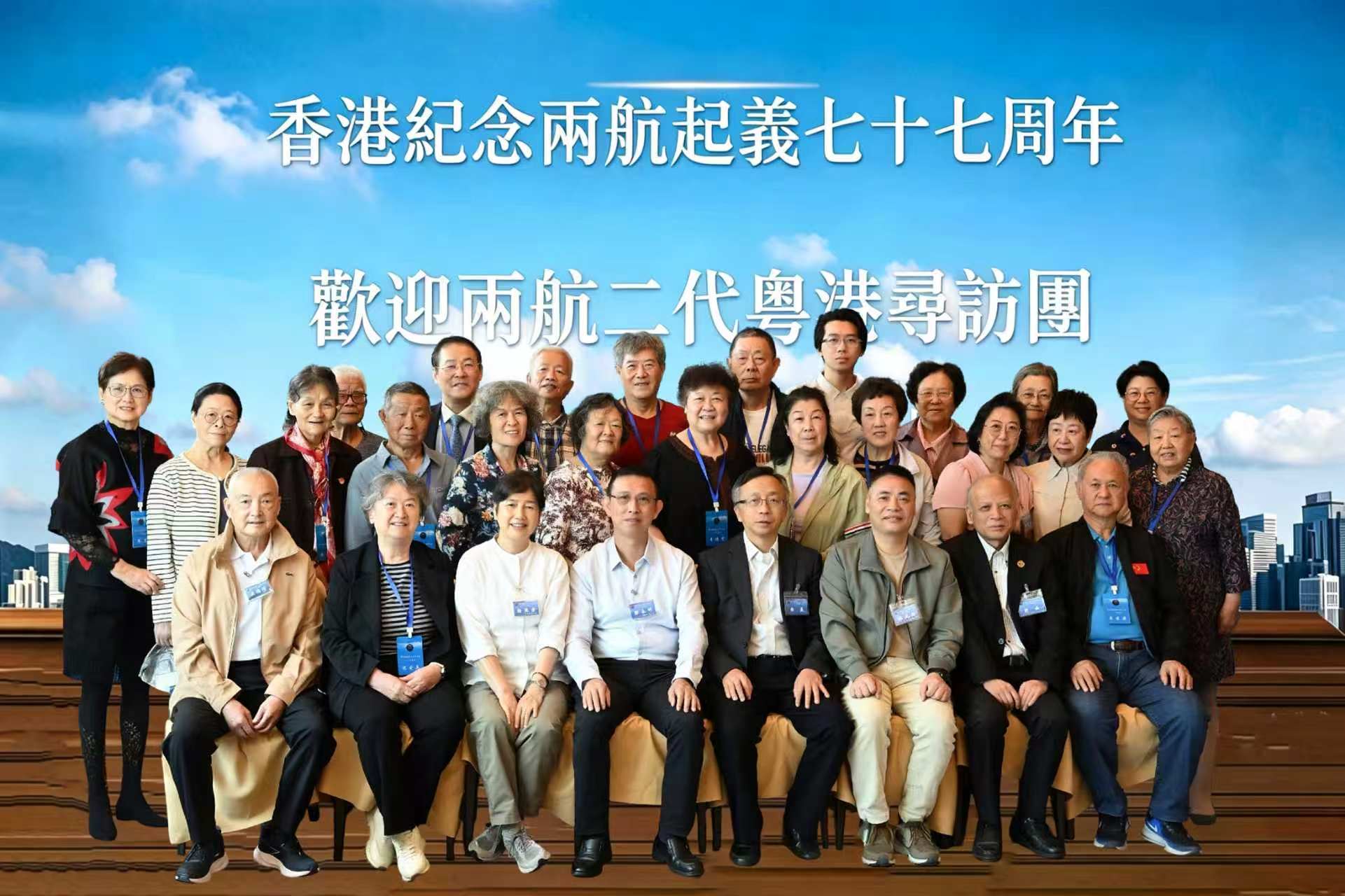
Sun Yu, vice president of Hong Kong CNAC, and leaders including the chairs of the Hong Kong Civil Aviation Union and the Seamen's Union, in a group photograph with all members of the visiting group and the second generation of the Two Airlines in Hong Kong
On the morning of the 14th, the visiting group visited the Hong Kong Central Library. Mr. Mei of the library's guided-tour team led everyone to hear an introduction and to visit each floor. In the collections on the 9th floor they found two books on the history of the Two Airlines written mainly by the second generation of the Two Airlines, Historical Glory and Takeoff in Hangzhou, both donated by the second generation of the Two Airlines. They also opened a computer to search the Hong Kong Old Newspapers electronic resources system, and found reports in Ta Kung Pao of November 10, 1949, on the Two Airlines Uprising, which caused a sensation at home and abroad.